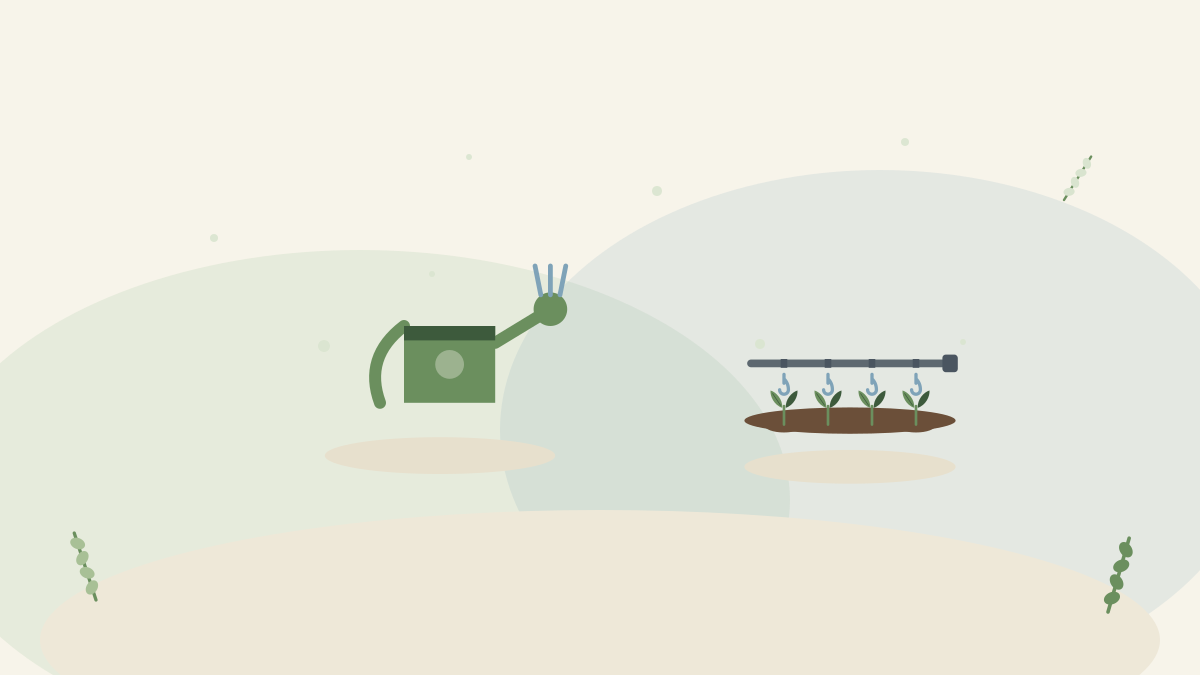
Watering by hand has a rhythm to it — the evening round with the can, the daily check of the pots — and for many gardeners it's a pleasure, not a problem. But it has three failure modes that eventually push people toward irrigation: it becomes a time-consuming chore in a big garden, it becomes a holiday crisis when you're away, and, done badly with a sprinkler left running, it becomes a water-wasting habit. Irrigation systems solve all three — but the real skill is matching the system to your garden rather than over-engineering a simple situation.
This guide runs the honest spectrum from watering can to fully automated drip, with the key principle stated up front: start with the simplest thing that solves your actual problem, and expand only if you need to. Most gardens need far less irrigation hardware than the catalogues suggest — and a modest tap timer with a soaker hose solves more real problems than an elaborate system ever will.
First, the Honest Question: Do You Need One?
The FAQ's test is the starting point: hand watering is genuinely fine — often ideal — and a system earns its place only when hand watering becomes a burden or a limitation. Before buying anything, identify which problem you're actually solving:
- Too much time: a large garden that takes an hour to water by hand is a candidate for automation.
- Holiday and travel: plants stranded while you're away — the single most common reason people automate, and the one a basic timer solves outright.
- Container thirst: a pot collection that dries daily in summer benefits enormously from drip lines to each pot.
- Water waste: replacing a wasteful sprinkler habit with efficient drip to cut usage and cope with restrictions.
If none of these bites — if hand watering works and you enjoy the daily contact with your plants — then keep your can. The best irrigation system is the one that solves a real problem, not the one that impresses the neighbours.
The Spectrum, From Simple to Automated
Irrigation isn't one thing; it's a ladder you climb only as far as you need:
- Hand watering (can and hose): maximum control and contact, minimum equipment. The default, and genuinely the right answer for many.
- Soaker hose: a porous hose that weeps along its length, snaked through beds — cheap, simple, efficient for dense plantings and rows (the FAQ's comparison).
- Drip irrigation: tubing with emitters delivering measured water to precise points — the customizable, efficient choice for spaced plants, containers, and mixed beds.
- Sprinklers: spray water over an area — useful for lawns and large open areas, but the least efficient for beds (evaporation, overspray, wet foliage).
- Automated systems: any of the above on a timer, from a simple tap timer to a multi-zone smart controller.
Drip and Soaker: The Efficient Core
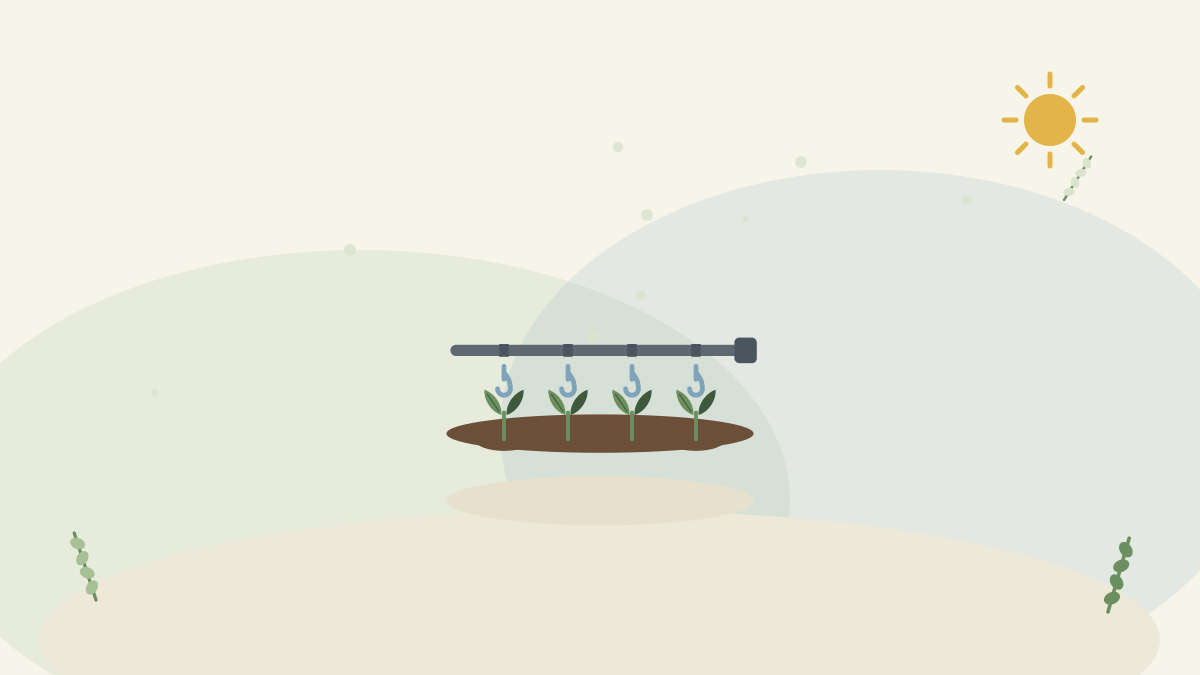
For garden beds and containers, drip and soaker systems are the heart of efficient watering, and the FAQ explains why they beat sprinklers so decisively: they deliver water slowly, directly to the soil at the root zone, so almost none is lost to evaporation or overspray, it soaks in rather than running off, and the foliage stays dry — exactly what the disease guides want.
- Soaker hose suits uniform beds and rows: cheap, simple, snake it through and connect to the tap. Ideal for the vegetable garden's rows.
- Drip irrigation suits precision: containers, specimen plants, spaced-out and mixed plantings each get their own emitter delivering a measured amount. The container and balcony gardens' answer to daily summer thirst.
- Many gardens use both — soaker in the veg beds, drip to the pots and specimens — connected to the same tap and timer.
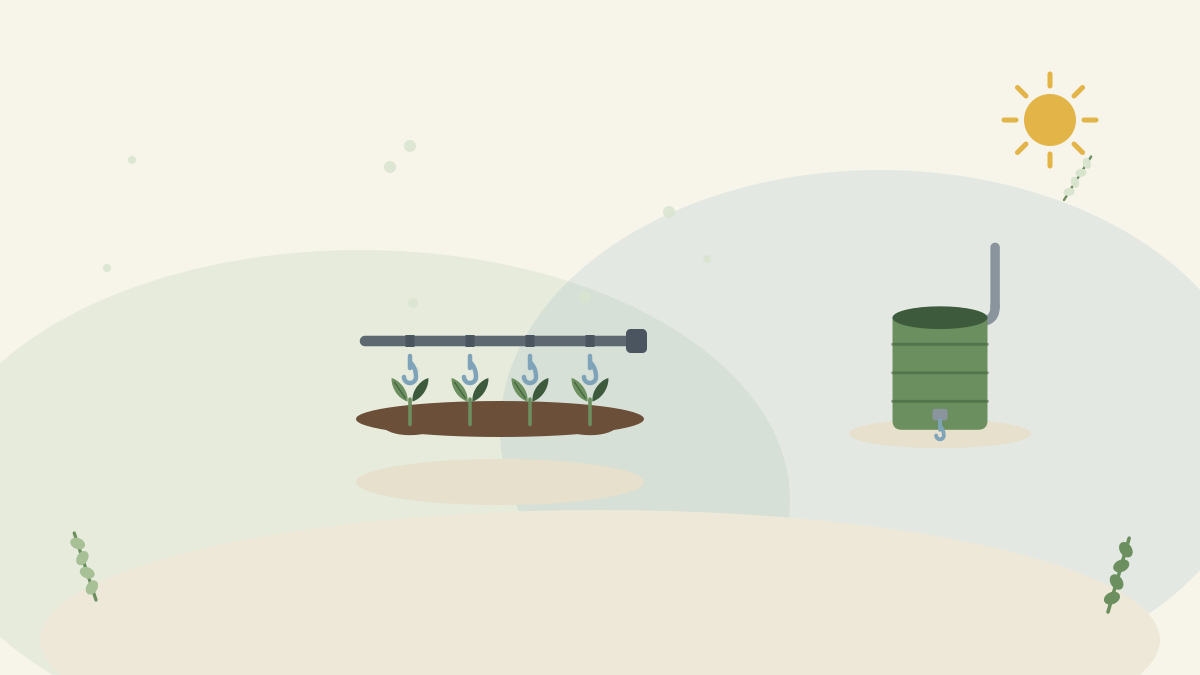
- The rainwater pairing: drip and soaker systems run beautifully from a raised water butt on gravity alone, marrying the harvesting guide's free water to the efficiency of drip.
Timers and Automation: Start Simple
The FAQ's reassurance is the key message: automation is easier than people expect, and modular. The ladder:
- The tap timer is the transformative entry point: a battery unit that screws onto the tap and runs your soaker or drip line on a schedule — no plumbing, no tools, and it solves the holiday problem for the price of a modest gadget.
- Programmable and smart timers add multiple watering windows, multiple zones, and features like rain sensors and app control that skip watering when it's raining — genuinely useful for efficiency, unnecessary for many.
- Zoning lets different areas water on different schedules — the thirsty containers daily, the established beds twice a week — matching the site's whole watering philosophy of different plants, different needs.
- The golden rule: start with the simplest thing (often just a tap timer and a soaker hose) and add complexity only if a real need appears. Over-engineering on day one is the classic irrigation mistake.
Efficiency: Watering Well, Not Just Automatically
An irrigation system can waste water as easily as save it if set up thoughtlessly — automation without efficiency just wastes water on a schedule. The principles that make a system genuinely efficient, drawn straight from the site's watering doctrine:
| Principle | Why it matters |
|---|---|
| Water at the roots, not the air | Drip and soaker beat sprinklers — minimal evaporation and overspray |
| Water in the morning | Set timers for early morning — less evaporation, dry foliage by evening (disease-safe) |
| Deep and infrequent, not little and often | Program longer, less frequent runs to encourage deep roots, not shallow ones |
| Use a rain sensor or check the schedule | Don't water when it's rained — the classic automated-system waste |
| Pair with mulch | Mulch plus drip is the ultimate water-saving combination — the soil holds what the drip delivers |
| Run from harvested rainwater | Free, soft water plus efficient delivery — the sustainable ideal |
The system is only as good as its settings: a drip system on a sensible morning, deep-and-infrequent schedule, paired with mulch and fed from a butt, is water efficiency at its best. The same hardware watering wastefully at midday, ignoring the rain, is just an automated way to waste water.
The Components, Demystified
Irrigation catalogues can look intimidating, but the parts list for a home drip system is short and logical once named. The supply is your tap (with a timer and often a pressure reducer and filter to protect the fine emitters); the main line is the larger tubing that carries water around the garden; the drip line or micro-tubing branches off it to reach individual plants and pots; the emitters (drippers) are the small fittings that release measured water at each point, in various flow rates; and a scatter of connectors, stakes, and end caps assembles and anchors it all. Soaker-hose setups are even simpler — just the porous hose, a connector, and the tap. Most home systems are sold as modular kits, so you rarely buy parts individually; you pick a kit sized to your garden and add extension pieces as it grows. Understanding the vocabulary turns the catalogue from baffling to browsable — and reveals that a basic bed or container system is genuinely just tubing, emitters, and a timer.
Cost, Payback, and Buying Sensibly
Irrigation spans a huge price range, and matching spend to need is the whole art. At the low end, a tap timer and a soaker hose cost little and solve the two biggest problems — holiday watering and chore reduction — for most small gardens; this is where the majority of gardeners should start and many should stop. A modular drip kit for a container collection or a few beds is a modest step up and pays back in time saved, water saved (especially where metered), and plants that no longer die of midday thirst while you're at work. The costs climb with zones, smart controllers, and large tubing networks — worthwhile for big or complex gardens, overkill for a patio. The honest buying advice mirrors the whole guide: identify the specific problem, buy the simplest kit that solves it, and expand only if a real need appears. An efficient system paired with a rainwater butt also saves on water bills over time, tilting the payback further in its favour where water is charged by volume.
Matching the System to the Garden
- Containers and balconies: drip lines to each pot on a timer — the answer to the daily-summer-thirst problem the container and balcony guides describe. Self-watering pots are the no-plumbing alternative.
- Vegetable beds: soaker hose through the rows, or drip lines, on a timer — consistent moisture that prevents the erratic-watering problems (blossom-end rot, splitting) the veg guides warn about.
- Mixed borders: drip to the thirsty and new plantings; established shrubs and perennials often need no irrigation at all once settled, per the deep-and-rare doctrine.
- Lawns: sprinklers are the practical choice here, if you water lawns at all — though the summer guide's brown-is-dormant truce means many gardeners rightly don't.
- Greenhouses: drip systems and automated watering shine under glass, where daily summer watering is otherwise relentless.
Setting Up and Maintaining a System
- Plan before buying: sketch the garden, mark what needs watering, and buy the tubing, connectors, and emitters to match — most drip systems are modular kits you assemble to fit.
- Assembly is hand-work: push-fit connectors, hand-tightened fittings, tubing cut to length — genuinely a no-tools job for basic systems.
- Test and adjust: run it and watch — check every plant gets water, adjust emitter placement, confirm the timer schedule delivers deep enough soaking.
- Seasonal maintenance: flush lines to clear blockages, check for leaks and clogged emitters, and — crucially in cold climates — drain and protect the system before winter freezes, the same freeze logic as the water butt.
- Watch it periodically: automated doesn't mean forgotten — a blocked emitter or split tube can leave a plant dry unnoticed, so a periodic walk-round confirms it's all working.
The Classic Mistakes
- Over-engineering a simple garden that a can or a tap timer would serve.
- Sprinklers on beds, wasting water to evaporation and wetting foliage.
- Automating without efficiency — midday watering, ignoring rain, shallow frequent runs.
- Forgetting the system exists until a blocked emitter has killed a plant.
- Skipping winter drain-down and splitting the tubing in a freeze.
- Not pairing with mulch, letting the delivered water evaporate straight back off bare soil.
The Bottom Line
Garden irrigation isn't about automating everything — it's about solving the specific problem hand watering has become, with the simplest system that does the job. Keep the can if you love it; reach for a soaker hose or drip line when the garden's too big, the pots dry too fast, or the holidays leave plants stranded. Favour drip and soaker over sprinklers for their real efficiency, add a tap timer to conquer the holiday problem, and set it all to water deeply in the morning, paired with mulch and fed from a rainwater butt where you can. Start simple, expand only as needed, and remember that the goal is watering well — not just watering automatically.
Comments
No comments yet. Be the first to share your experience.