If a balcony, windowsill or patio has room for exactly one thing, it should be herbs. Nothing else comes close on value: herbs are among the most expensive things per gram in a supermarket, among the easiest things to grow, and among the few crops where the difference in flavour between shop-bought and just-picked is genuinely dramatic. A few pots by a kitchen door supply months of cooking from a footprint measured in centimetres.
They are also, quietly, where most small-space growers make their first mistakes — mixing herbs with opposite needs in one container, picking leaves instead of pruning stems, and expecting a supermarket pot to last. This guide covers the two groups that determine everything, what to grow, how to harvest so plants stay productive, and how to keep them going through winter.
The Two Groups That Explain Everything
The FAQ's central point deserves top billing, because getting it right removes most herb failures:
| Mediterranean group | Soft-leaved group | |
|---|---|---|
| Examples | Rosemary, thyme, sage, oregano, lavender | Basil, parsley, coriander, chives, mint |
| Sun | Full sun | Sun to partial shade; some prefer shade in high summer |
| Water | Keep on the dry side — overwatering kills | Consistent moisture |
| Compost | Gritty, free-draining, lean | Richer, moisture-retentive |
| Feeding | Minimal — lean growing improves flavour | Regular feeding through the season |
| Habit | Woody perennials, long-lived | Mostly annual or short-lived; resow through the season |
Never plant the two groups in one container. The mixed herb planters sold everywhere guarantee that half the plants are being mistreated — and the half that suffers is usually the Mediterranean half, drowned in rich damp compost.
And one standing rule: mint goes in its own pot, always. It spreads by runners and will take over anything it shares with, which is why experienced gardeners never plant it in a border either.
What to Grow
- Start with what you cook. A thriving plant you never use is wasted space; two herbs you use constantly beat six you admire.
- Chives — hardy, perennial, regrow endlessly after cutting, tolerate poor conditions. The easiest of all.
- Mint — nearly unkillable, tolerates shade, in its own pot.
- Thyme and rosemary — drought-tolerant, evergreen, long-lived; the backbone of a sunny herb collection.
- Parsley — productive, tolerates some shade, biennial so worth resowing.
- Basil — the most demanding, wanting warmth, sun and consistent moisture, and worth the effort for flavour and cost saving.
- Coriander — fast, but bolts readily in heat; sow little and often rather than fighting it.
- Bay — a slow, long-lived shrub in a pot, giving leaves year-round for very little attention.
Add one new herb per season rather than buying a collection at once — you will learn each one's habits and waste less.
Pots, Compost and Position
- Group by need, not by looks: dry-lovers together, moisture-lovers together, mint alone.
- Compost to match: gritty free-draining mix for Mediterranean herbs (add grit or perlite to ordinary compost), standard compost for the soft-leaved group.
- Drainage holes always, and terracotta suits Mediterranean herbs particularly well because it dries faster — the container guide's material logic applied.
- Size: most herbs are happy in modest pots, but bigger holds water more evenly. Bay, rosemary and mint benefit from generous containers.
- Position: as much sun as you can give the Mediterranean group; the soft-leaved group tolerates less and appreciates afternoon shade in high summer.
- Put them near the kitchen door. This is not a trivial point — herbs at the far end of a garden get used a fraction as often as herbs within reach while cooking.
Harvesting: Pruning, Not Picking
The FAQ identifies the mistake that ruins more herb plants than any pest: picking individual leaves instead of cutting stems.
- Pinch or cut whole stem tips just above a pair of leaves. The plant branches at that point, becoming bushier and more productive — the pruning guide's principle that cutting stimulates growth below the cut.
- Harvest regularly, even when you do not need it. An uncut herb runs to flower, and flowering turns leaves bitter and slows production sharply. This is why basil and coriander appear to give up so suddenly.
- Pinch out flower buds on herbs grown for leaves — though letting some flower at season's end feeds pollinators, which the wildlife guides would encourage.
- Never take more than about a third at once from a plant you want to keep cropping.
- Harvest in the morning for the best flavour, when essential oils are at their strongest.
- Woody herbs like rosemary and thyme are cut lightly and often; avoid cutting back into bare old wood, which many will not regrow from.
Growing Herbs From Seed or Buying Plants
The choice differs by herb, and getting it right saves both money and disappointment. Sow from seed: basil, coriander, parsley, dill and chervil are cheap, quick and best grown in successive small batches rather than bought as single plants — a packet costs less than one supermarket pot and supplies a whole season. Buy as plants: rosemary, thyme, sage, bay and mint are slow from seed, and a single plant is a long-term investment that will crop for years, so paying for an established one makes sense. Either: chives and oregano grow easily from seed but also establish quickly from a bought plant. There is a third route that costs nothing at all — take cuttings. Most woody herbs root readily from softwood cuttings taken in early summer, using the method in the cuttings guide, and mint roots in a glass of water within days. One rosemary plant, propagated, becomes a hedge of them; a friend's mint becomes yours for the price of a stem.
Rescuing Supermarket Herb Pots
Almost everyone starts here, and almost everyone watches them collapse within a fortnight — which is not your fault. A supermarket pot contains dozens of seedlings crammed together, forced for quick sale, competing for light, water and root space. They are grown to be used, not to live.
To turn one into a lasting plant: knock it out of the pot and divide it into two or three clumps, pot each into its own container of fresh compost, water in, and keep out of harsh sun for a few days while they recover. Given room, light and proper harvesting, the survivors often go on for months. Basil responds particularly well to this, and it is far cheaper than repeatedly buying replacements.
Herbs Indoors
The FAQ's honesty applies: light is the limiting factor, and kitchen windowsills offer less than they appear to. Chives, mint and parsley cope best; basil needs a genuinely bright warm sill; and rosemary and thyme rarely thrive indoors long-term. Practical improvements are the ones the houseplant light guide sets out — brightest window available, rotate the pots, keep them off the drying air above radiators, avoid overwatering in low light, and consider a small grow light through winter. Indoors, herbs are best treated as a supplement to outdoor pots rather than a replacement for them.
Herbs in the Smallest Spaces
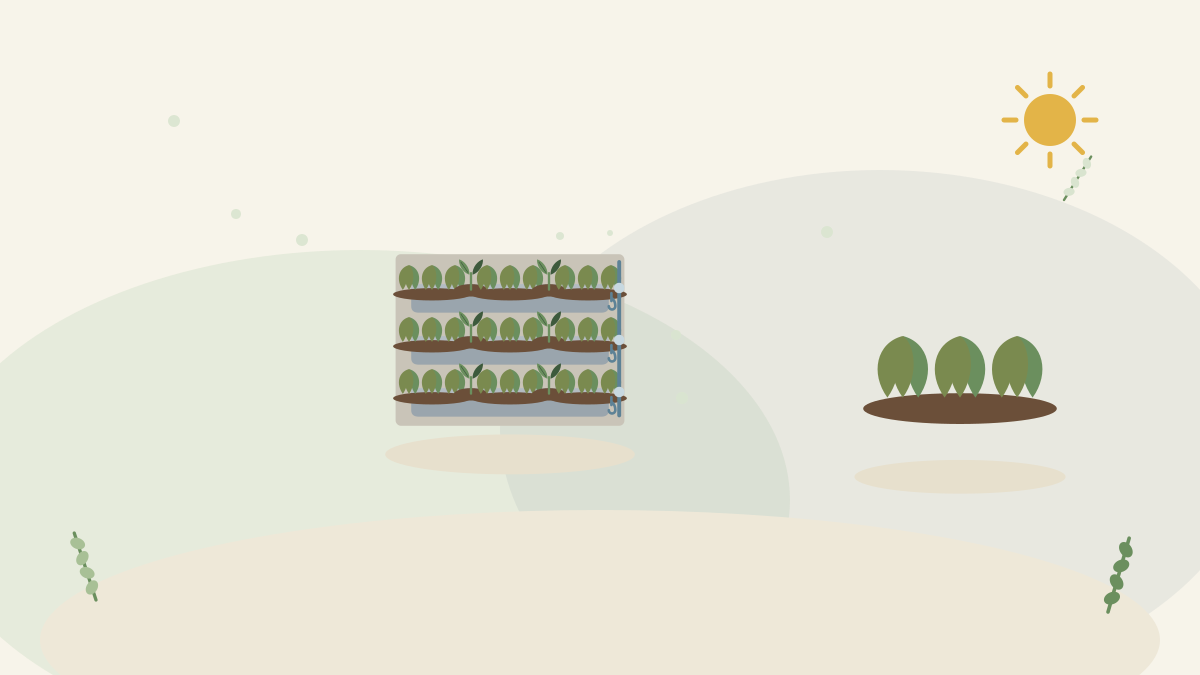
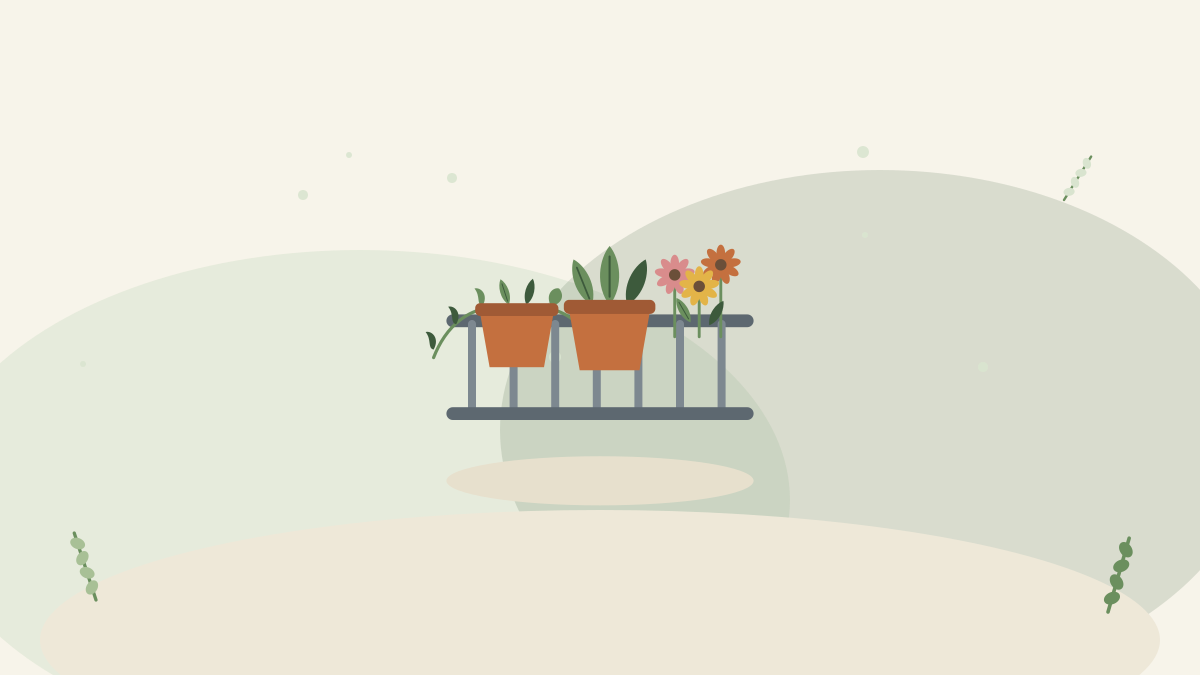
Even without a balcony there is usually somewhere. A window box on a sunny sill holds three or four herbs comfortably and needs no floor space at all. A railing planter does the same on a balcony without using the standing area. Wall-mounted pots or pockets put herbs at hand height beside a door, and a tiered stand turns half a square metre of paving into three levels of growing. Vertical planters and hanging baskets suit trailing herbs like thyme and oregano particularly well. The considerations are the same as for any small-space growing: weight where things are suspended or on a balcony, watering — since small containers in sun dry within hours, so the smaller the container the more attentive you must be — and access, because a herb you cannot easily reach while cooking will not get used. Grouping small pots together, as the container guide recommends, also slows drying and makes the watering round a single stop.
Through the Year
| Season | What to do |
|---|---|
| Spring | Sow soft herbs; pot up new plants; trim woody herbs lightly to shape as growth starts; start feeding the moisture group |
| Summer | Harvest constantly; pinch flower buds; water daily in heat for the soft group, sparingly for the Mediterranean; sow successional basil and coriander |
| Autumn | Last harvests; preserve surplus; bring tender herbs under cover; reduce watering |
| Winter | Hardy herbs tick over outdoors; protect pots from freezing; keep Mediterranean herbs dry rather than warm; minimal indoor harvesting |
Overwintering note: the Mediterranean herbs are killed far more often by winter wet than winter cold — the same point the winter checklist makes about containers generally. Raise pots on feet, move them against a wall, and stop feeding.
Pests and Problems on Herbs
Herbs are relatively trouble-free, and the problems they do get are mostly cultural rather than pathological — which the diagnosis guide would predict. The genuine pests: aphids cluster on soft new growth, especially on indoor and sheltered plants, and are dealt with by squashing, a jet of water, or the gentle escalation the pest guides describe; slugs and snails take basil and soft herbs outdoors, particularly seedlings; and whitefly can appear on indoor and greenhouse herbs. The far more common problems are conditions: root rot in Mediterranean herbs from overwatering, which is by some distance the leading cause of dead rosemary; legginess from insufficient light; bolting in coriander and basil from heat and irregular watering; and powdery mildew on crowded, dry-rooted plants. One important note on treatment: since you are going to eat these plants, keep interventions to physical removal, water and mild soap sprays, rinse anything harvested afterwards, and observe any interval stated on a product label.
Preserving the Surplus
- Freezing suits soft herbs better than drying — chopped and frozen in oil or water in ice cube trays, ready to drop into cooking.
- Drying suits the woody Mediterranean herbs, which keep their flavour well; hang small bunches somewhere warm, dry and airy.
- Herb butters, oils and pestos use up a glut and keep in the fridge or freezer.
- Cut and come again beats preserving where possible — the advantage of growing herbs is having them fresh, so preserve only genuine surplus.
- Let some flower and seed at the end of the season: coriander seed is a spice in its own right, and the flowers feed pollinators.
The Classic Mistakes
- Planting Mediterranean and soft herbs together in one container.
- Planting mint with anything else, and losing the pot to it.
- Picking leaves instead of cutting stems, producing leggy unproductive plants.
- Letting herbs flower and wondering why the leaves turned bitter.
- Overwatering rosemary, thyme and sage, which is how most of them die.
- Expecting a supermarket pot to last without dividing and repotting it.
- Growing herbs far from the kitchen, where they are admired rather than used.
The Bottom Line
Herbs are the best return on space, effort and money available to a small-space grower. Learn the two groups first — Mediterranean herbs wanting sun, grit and dryness, soft-leaved herbs wanting moisture and richer compost — and never mix them in one pot, with mint kept firmly on its own. Grow what you actually cook with, put the pots within reach of the kitchen door, and harvest by cutting stem tips rather than picking leaves, regularly enough that nothing runs to flower. Divide supermarket pots rather than watching them fail, keep expectations realistic indoors where light is the limit, and protect the Mediterranean group from winter wet rather than winter cold. A handful of pots, tended this way, will out-earn every other crop you could put in the same space.
Comments
No comments yet. Be the first to share your experience.