
Every home already owns a water-collection scheme: the roof. A modest roof in a moderately rainy climate sheds tens of thousands of litres a year down the pipes and away — while metres from the downpipe, the garden drinks treated, pumped, paid-for tap water all summer. Rainwater harvesting, at the household scale, is simply interrupting that pipe with a barrel: an afternoon’s install, and thereafter the sky fills the watering cans.
The case stacks beyond thrift. Rainwater is soft and unchlorinated — plants openly prefer it (and the houseplant divas with browning tips demand it); a stored reserve carries the garden through the exact dry spells when water is scarcest or restricted; and every butt-full kept back is runoff that never surged into the drains. This guide runs the honest math, installs the classic butt properly, keeps the water clean, and pushes past the barrel to the biggest tank of all: the soil.
The Roof Math (Happily Simple)
Collectable water ≈ roof footprint (m²) × annual rainfall (mm) = litres per year — one square metre of roof catches one litre per millimetre of rain. A small 50 m² roof half-drained by one downpipe in a 700 mm climate offers ~17,500 litres a year past that single pipe; even capturing a sliver of it dwarfs a typical butt. The practical readings: any butt refills many times a season (its real capacity is turnover, not volume), the limiting factor is storage rather than supply, and the design question is not “will it fill?” but “how fast will I empty it?” — which is why the linking section exists.
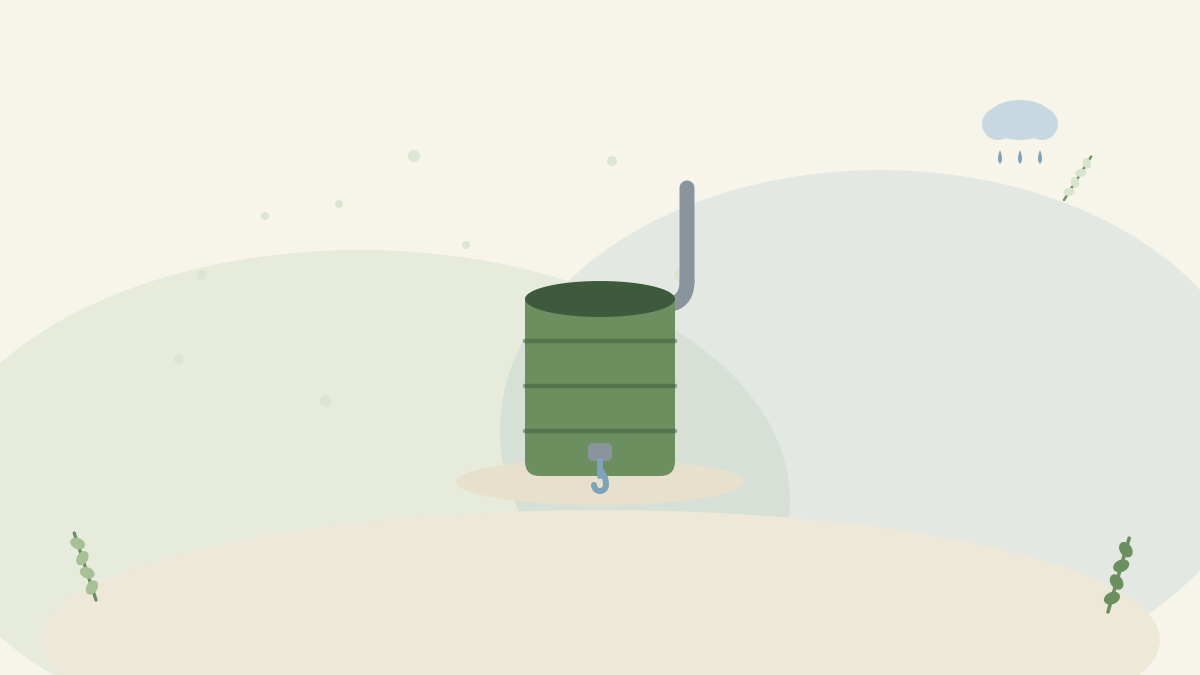
Installing the Classic Water Butt
- Choose the spot: the downpipe nearest the thirsty beds, with firm level ground — a full 200-litre butt weighs 200 kg and forgives no wobbly paving.
- Raise it on a stand (purpose-made or solid blocks): the clearance under the tap decides whether a watering can actually fits — the most common install regret, discovered exactly once.
- Fit a downpipe diverter, the small kit that tees rain into the butt and — crucially — self-limits at the full mark, sending overflow onward down the original pipe to the drain instead of over your foundation. Cut the pipe per the kit’s template; it is a hacksaw job, not plumbing.
- Lid on, always: child safety first, then the algae-darkness rule and the mosquito mesh from the FAQs — one fitted lid answers all three.
- Anchor against the empty-and-windy day: a light, empty butt in an exposed corner can walk in a gale — a strap to the wall bracket or a paver in the base while new keeps it home.
- Test in the next rain: fill, watch the overflow behave, check the tap height with your actual can, and confirm the stand sits dead level once loaded. Done — the whole job sits comfortably inside an afternoon at tool-kit skill level, and the diverter kit's template does the only measuring.
Choosing the Butt: A Buyer's Five Minutes
| Option | Honest reading |
|---|---|
| Standard 200 L barrel | The default for good reason: cheap, proven, fits beside most downpipes |
| Slimline / wall tank | Pays its premium only where the side-return is genuinely narrow |
| Decorative (planter-top, faux terracotta) | Costs double per litre; buy it for the spot everyone sees, not the shed corner |
| Recycled food-grade barrel | The thrift champion — confirm food-grade origin and add lid, stand, tap yourself |
| IBC tote (1000 L) | Serious volume, serious footprint; dress it in shade and climbers or the algae wins |
Whatever the vessel: opaque beats translucent, a real tap beats a bung, and the stand is not optional. Secondhand listings overflow with barely used butts every spring — the thrift route is genuinely good here. The shopping list for the classic install stays short — butt, stand, diverter kit, hacksaw, and an hour — with linking kits and a leaf guard as the two upgrades worth adding at checkout rather than later.
No Downpipe? The Balcony Rain Station
Balcony and courtyard gardeners are not excluded — just honest about scale. Open vessels (buckets, troughs, a lidless storage box) set out during real rain bank surprising litres per downpour, decanted afterward into lidded cans and bottles for the week's watering; a balcony that catches weather can also tilt a small awning, tray, or repurposed gutter length into a waiting container, turning a railing into a miniature roof. The rules shrink with the hardware: everything lidded after collection (the same mosquito and algae logic), weight kept sensible on suspended floors per the balcony guide's standing caution, and expectations set right — this is a supplement that softens the tap habit and supplies the houseplants' rainwater jug, not a summer-long reserve. As a gateway habit, though, nothing beats it: the gardener who decants a rainy Tuesday into bottles is the same one installing a diverter within a year of getting a downpipe.
Scaling Up: The Linked Fleet
When one butt runs dry by July (it will), the upgrade is horizontal: a second butt beside the first, joined near the base with a cheap linking kit so they fill and empty as one tank — then a third, as space and appetite allow. Corners behind sheds, garage downpipes, and greenhouse gutters (the most underrated catchment: it rains on the greenhouse exactly where the watering happens) all host quiet capacity. Serious gardens graduate to slimline wall tanks or an IBC tote dressed in a screen of climbers — but a linked pair of ordinary butts already covers most gardens’ shoulder-season watering entire.
Using the Harvest
- The watering-can culture the deep-and-rare doctrine already prefers: cans filled at the tap, delivered to the roots, mornings. A butt turns the can from chore equipment into a free-water dispenser.
- Gravity drip: a raised butt runs a soaker hose or drip line to nearby beds on nothing but height — slow, root-zone delivery that the tomato pots particularly appreciate.
- The houseplant dividend: a jug of rainwater indoors retires the tap-water complaints of calatheas, carnivores, and the brown-tip brigade — the winter houseplant guide’s softest upgrade.
- Priority when the level drops: containers and new plantings first (no deep roots to fend for themselves), the veg bed second, established borders last — they were built for drought by every mulching and soil chapter on this site.
- The honest boundary from the FAQ: garden water, not drinking water — and the veg-bed etiquette of watering soil, not salad leaves.
Keeping It Clean
- Darkness beats algae (the FAQ’s green-water clinic): opaque butt, solid lid, gaps closed.
- Gutter hygiene is water hygiene: the annual autumn gutter clear — already on the autumn checklist for the house’s sake — is also the filter change for the harvest; a leaf guard on the diverter inlet helps between cleanings.
- Flow-through keeps it fresh: a butt that is used and refilled stays sweet; one that stands stagnant all summer sours. Use the water — hoarding it defeats both purposes.
- The occasional empty-and-scrub (plain water, stiff brush) resets the tank; time it for late winter so the spring rains refill a clean system.
- Winter per the FAQ: mild climates harvest straight through; freezing climates run the half-empty/insulate/drain ladder before the hard frosts.

Beyond the Barrel: The Soil Is the Big Tank
The largest rainwater store on the property holds no plastic at all. Every practice the soil and mulch guides preach — organic matter worked in yearly, mulch held over every bed — raises the ground’s own storage capacity by thousands of litres, banking each rain where roots drink directly. The supporting moves: shaping beds level or gently dished so rain soaks rather than sheets off; directing a downpipe’s overflow toward a planted hollow — a pocket rain garden — instead of the storm drain; and letting paths and drives stay permeable (gravel, pavers with joints) where choice allows. A garden managed this way needs the butt less every year — which is the quiet endgame: harvesting rain so well into the soil that the barrel becomes the backup, not the plan.
The Harvest Year at a Glance
| Season | The rain work |
|---|---|
| Spring | Reconnect after any winter drain-down; first fill funds the sowing season; leaf guard checked after the blossom drop |
| Early summer | Peak use: cans, drip lines, the pot round; watch levels and ration by the priority ladder as dry spells stretch |
| Late summer | The empty-butt weeks in dry years — tap takes over without guilt; every passing storm rebanks a fleet overnight |
| Autumn | Gutter clear (the filter change), one scrub if due, then let the wet season refill everything for free |
| Winter | Mild climates: harvest on. Freeze climates: the half-empty/insulate/drain ladder from the FAQ |
Greywater, Briefly and Honestly
The adjacent idea deserves its boundary marker: rescuing rinse water is not the same license as harvesting rain. Cooled cooking water and the dehumidifier’s tank pour onto beds without a second thought; washing-machine and shower water is a maybe — plant-safe only with garden-friendly detergents, delivered to soil around ornamentals (not pooled, not on edibles), and regulated differently from place to place, so local rules get a check before any permanent plumbing. In drought weeks, a washing-up bowl’s second life on the flower bed is honest thrift; a full greywater system is a separate project with its own homework.
Cost and Payback, Honestly
A butt, stand, and diverter cost roughly what a few months of light garden tap-watering costs — so the pure cash payback runs a couple of seasons, faster where water is metered and pricey, slower where it is cheap. But the honest ledger reads wider: the reserve that keeps pots alive through a hosepipe ban, the soft water the plants visibly prefer, the runoff kept out of storm drains, and the unglamorous resilience of a garden that owns its own supply for weeks at a stretch. Few sustainability purchases this cheap do this many jobs — and none of the others also waters the tomatoes.
The Classic Mistakes
- The ground-level tap no watering can fits under.
- Skipping the diverter and flooding the wall with a crude open-pipe fill.
- The translucent lidless butt — algae farm plus mosquito nursery in one purchase.
- Hoarding the water until it stagnates instead of cycling it through the garden.
- A full rigid butt into a hard freeze, discovering expansion physics via split seams.
- Forgetting the gutters, then blaming the butt for the sludge the roof sent it.
The Bottom Line
Interrupt one downpipe with a lidded, raised, diverter-fed butt and the sky starts paying a water bill it was always willing to cover: soft, free, plant-preferred litres for the cans, the drip line, and the houseplant jug. Keep it dark, keep it moving, clear the gutters, and mind the freeze — then let ambition run horizontal into a linked fleet while the mulch and compost quietly turn the soil itself into the biggest tank on the property. The rain is falling anyway; the whole craft is owning a bucket worth of it.



Comments
No comments yet. Be the first to share your experience.