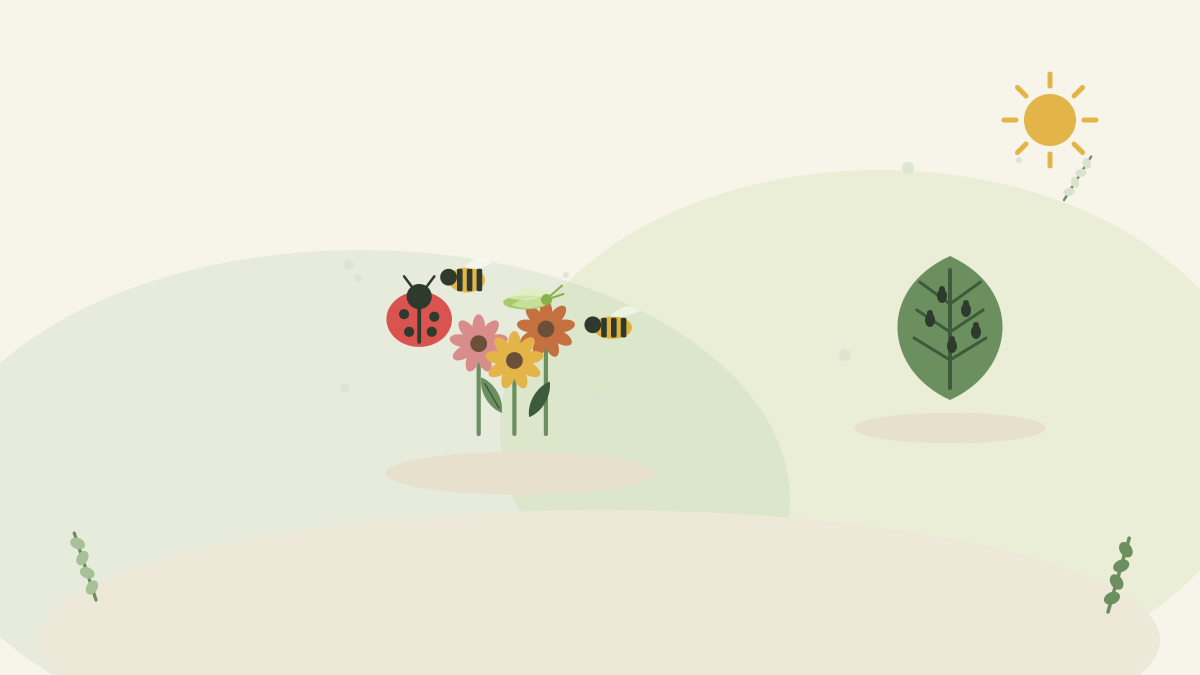
Every garden already employs a pest control service. Ladybird larvae are working through aphid colonies, hoverfly larvae are doing the same in places you cannot see, tiny parasitic wasps are laying eggs inside caterpillars, ground beetles are hunting slugs after dark, and none of them is charging anything. The only question is whether your garden is somewhere they want to stay.
Attracting and keeping that workforce takes three things — flowers, shelter, and the restraint not to spray — and it does more for long-term pest control than anything available in a bottle. This guide covers who is doing what, what actually attracts them, why broad-spectrum sprays backfire so reliably, and when buying biological controls makes sense.
Who Is Working For You
| Group | Who | What they do |
|---|---|---|
| Predators | Ladybirds and larvae, lacewing larvae, hoverfly larvae, ground beetles, spiders | Eat aphids and soft-bodied pests in large numbers; ground beetles take slugs at night |
| Parasitoids | Tiny parasitic wasps | Lay eggs in aphids, whitefly and caterpillars — the papery aphid "mummies" are their work |
| Pollinators | Bees of many kinds, hoverflies, butterflies, moths | Set fruit and many vegetable crops — without them, blossom does not become food |
| Decomposers | Worms, woodlice, springtails, beetles | Break down organic matter and build soil — the compost and leaf mould guides' workforce |
The standouts are the double-duty insects. Hoverflies are the best example: the adults pollinate while the larvae eat aphids voraciously, so a hoverfly-friendly garden gets both jobs from one visitor. Ladybird larvae — the small, dark, alligator-shaped creatures people frequently mistake for pests and squash — eat far more aphids than the adults do.
The practical implication of the FAQ's point deserves stating plainly: an unidentified insect is more likely to be neutral or helpful than harmful. Identify before acting.
Flowers: The Main Attractant
The FAQ names the two features that matter, and they are not the obvious ones:
- Open, accessible flower shapes. Short-tongued insects — hoverflies, small wasps, many beetles — cannot reach into deep complex blooms. Simple daisy-like flowers and flat umbrella-shaped flower heads are disproportionately valuable, which is why many highly bred double flowers are useless to insects however showy they look.
- Continuity over the season. Flowering from early spring to late autumn matters more than abundance in June, because the hungry gaps at either end determine whether populations survive locally.
Practical sources of both:
- Let herbs flower. Coriander, fennel, dill, chives, mint and marjoram are all excellent — a strong argument for letting some bolt at the end of the season rather than pulling them, as the herb guide suggests.
- Let some vegetables bolt too — flowering brassicas, carrots and leeks are magnets, and cost you nothing if the crop is finished.
- Grow flowers among vegetables, which the courgette and balcony guides both recommend for pollination as well.
- Early and late flowerers are the most valuable of all — spring bulbs and early blossom, and late-season flowers that carry into autumn.
- Native and simple species generally outperform heavily bred ornamentals for insect value.
What Not to Do
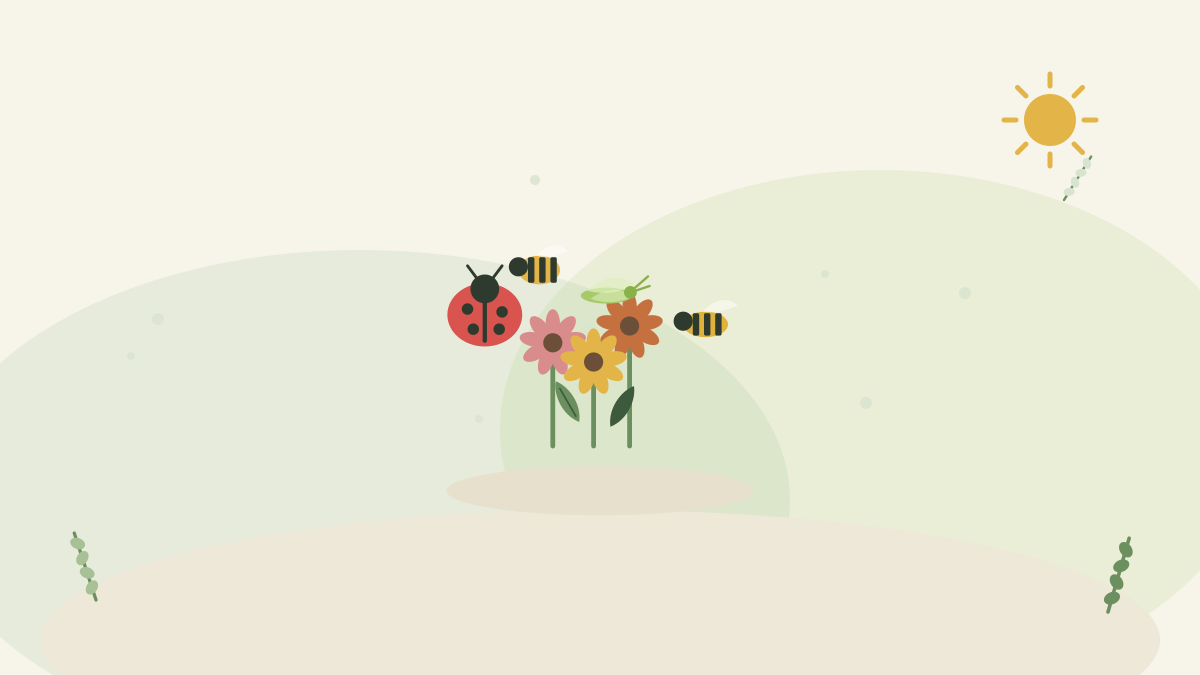
Alongside the positive measures, a short list of habits that undo them. Do not spray anything while plants are in flower, since that is precisely when pollinators are present — and if a spray is genuinely necessary, evening application when bees have stopped flying reduces the harm considerably. Do not use broad-spectrum insecticides preventively, which is spraying with no target at all. Do not clear every seed head and stem in autumn, which removes the overwintering sites the whole system depends on. Do not treat bare soil as tidy — mulch and ground cover shelter enormous numbers of beneficial invertebrates. Do not light the wildlife areas, as the garden lighting guide explains, since artificial light disrupts night-flying insects and the creatures that hunt them. And do not expect instant results: a garden recovering from years of spraying takes a season or two to rebuild its predator population, which is exactly the period when it is most tempting to reach for a bottle again.
Shelter and Overwintering
Flowers bring insects in; shelter keeps them there through winter so they are present in spring when aphids first appear. This is where the tidy-garden instinct does most damage:
- Leave hollow stems standing through winter — the perennial and winter guides both argue for this, and overwintering insects are the main reason.
- Leave leaf litter under hedges and shrubs, exactly as the leaf mould guide recommends.
- Keep a log pile or habitat corner somewhere undisturbed — the beetle barracks the slug guide keeps referring to.
- Hedges over fences where possible: dense growth is habitat and corridor at once.
- Insect hotels work for some species, particularly solitary bees, though a wild untidy corner does as much for less.
- Long grass in a patch left unmown supports far more than a close-cut lawn.
- Water, shallow with somewhere to land — the pond and bird guides' dish, serving another clientele.
Why Spraying Backfires
The FAQ explains the mechanism, and it is worth restating because it is the single most important idea here: broad-spectrum sprays kill predators and pests alike, and the pests recover faster.
Aphids reproduce extraordinarily quickly; ladybirds, lacewings and parasitic wasps do not. So a sprayed garden rebounds into infestation within weeks, minus the workforce that was previously containing it — and the gardener is now permanently doing a job that was being done for free. This is why every pest guide on this site recommends the same escalation:
- Do nothing yet. Small pest numbers are food for predators, and a garden with zero aphids supports no ladybirds.
- Physical removal — squashing, picking off, pruning out an affected shoot.
- A jet of water to dislodge aphids.
- Targeted soap or oil sprays, applied only where needed and preferably in the evening when pollinators are less active.
- Broad-spectrum products as a genuine last resort, knowing the cost.
Tolerating a low level of pest damage is not defeat — it is what keeps the predator population fed and present for when numbers rise.
Recognising the Larvae
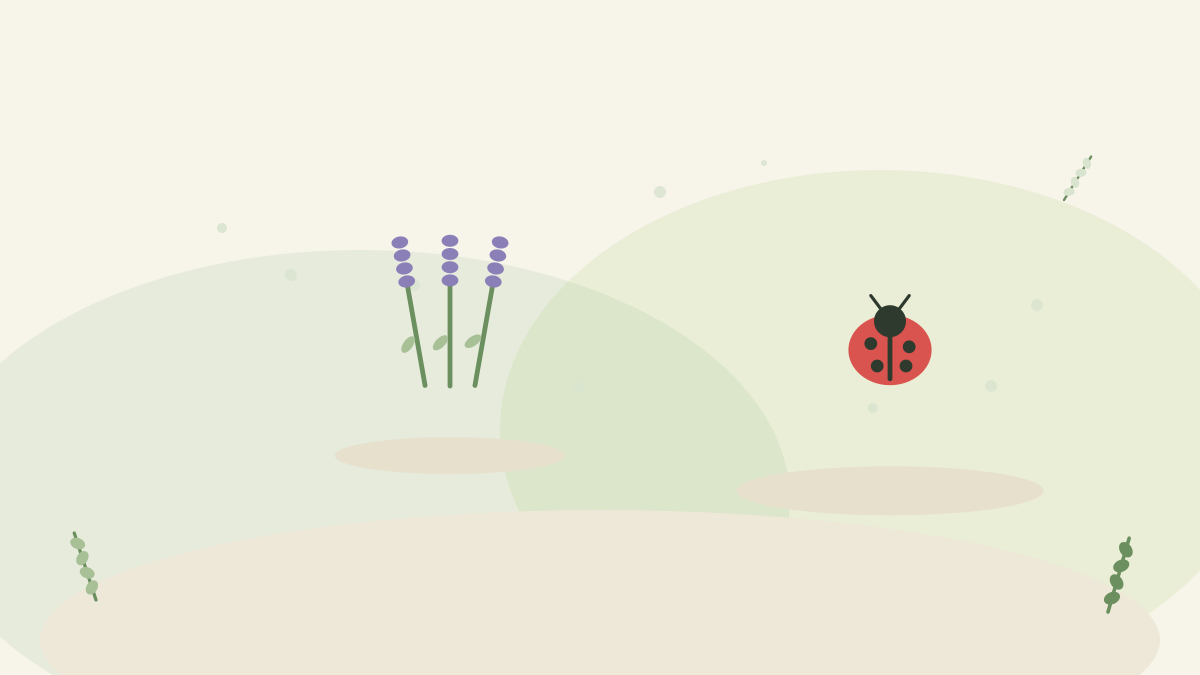
This deserves its own section, because misidentification causes real harm and takes five minutes to fix. Ladybird larvae look nothing like the adults — they are elongated, dark grey or black with orange or yellow markings, slightly spiky, and move about actively on leaves; they eat considerably more aphids than the adult beetles do, and they are squashed constantly by gardeners who assume anything unfamiliar is a pest. Hoverfly larvae are small, pale, legless and rather maggot-like, often found in the middle of an aphid colony they are steadily consuming. Lacewing larvae are small, brownish and alligator-shaped with prominent jaws, and some camouflage themselves with debris. Ground beetles are fast-moving, shiny and dark, usually seen when you lift something in daylight — they are hunters, not pests. The general rule that follows: if you find an unfamiliar insect on a plant with aphids, it is quite likely eating them. Photograph it and check before acting rather than assuming.
Plants Worth Growing for Beneficials
| Season | What to grow | Why |
|---|---|---|
| Early spring | Spring bulbs, early blossom, hellebores, pulmonaria | The hungry gap when queens and early emergers need feeding |
| Late spring | Fruit blossom, chives and early herbs allowed to flower | Overlaps pollination needs with predator recruitment |
| Summer | Simple daisy-type flowers, lavender, borage, umbellifers such as fennel and dill | Open shapes accessible to short-tongued insects |
| Late summer | Sedums, late-flowering perennials, bolted vegetables | Fuel for building up before winter |
| Autumn | Ivy flowers, asters, late annuals left standing | The most undervalued nectar source of the year |
Notice how much of this costs nothing: bolted herbs and vegetables, ivy already growing on a wall, and annuals left rather than cleared account for a large share of it.
Bought Biological Controls
The FAQ's assessment, made practical. These work best in enclosed spaces — greenhouses and conservatories — where introduced organisms stay put:
- Nematodes for slugs and vine weevil, watered onto moist soil within the right temperature window, as the slug guide details.
- Predatory mites for spider mite, particularly under glass.
- Parasitic wasps for whitefly — a mainstay of commercial glasshouse growing, per the whitefly guide.
- Timing matters: apply when the pest is present but before the problem is severe, since these reduce populations gradually rather than killing on contact.
- Conditions matter: most need specific temperature and moisture ranges. Read the instructions properly.
- Outdoors, habitat beats purchases. Released predators disperse; a flower-rich, sheltered garden supports a permanent wild population for nothing.
The Pollination Side
Beneficial insects are usually discussed as pest control, but for anyone growing food the pollination half is worth just as much. Many crops depend on insect pollination to set fruit at all — apples, pears, plums, cherries, strawberries, currants, courgettes, squashes, beans and many others — and poor pollination shows up not as an obvious problem but as disappointing yields, small or misshapen fruit, and the yellowing baby courgettes the vegetable guides describe. Enclosed spaces and balconies suffer most, since insects have to find you. The remedies overlap entirely with everything else in this guide: grow flowers among and near the crops, favour open accessible shapes, keep something in bloom across the season, and avoid spraying anything while plants are in flower. Where insect numbers are genuinely low, hand-pollination works as a stopgap for individual plants — but a flower-rich garden solves it permanently and pays in both crops and pest control at once.
Building a Balanced Garden
- Diversity beats monoculture. Mixed planting supports more species and rarely suffers the population explosions that single-crop blocks do.
- Accept imperfection. A few holes in leaves is what a functioning ecosystem looks like; a garden with no insect damage at all has usually been sprayed into sterility.
- Give it time. Predator populations lag pest populations — aphids arrive first, ladybirds follow. Panicking in that gap is what causes most unnecessary spraying.
- Learn the larvae. Ladybird and hoverfly larvae look nothing like the adults and are frequently killed by mistake; five minutes learning them prevents real damage.
- Connect the habitat: hedges, long grass and planted corridors let insects move through the garden rather than being stranded.
- Think beyond insects. Birds, frogs, toads and hedgehogs all eat pests, and the nest box, pond and habitat pile guides all feed into the same system.
The Classic Mistakes
- Spraying at the first aphid, before predators have arrived.
- Killing ladybird and hoverfly larvae by mistake.
- Growing only showy double flowers that insects cannot feed from.
- Autumn tidying that removes every overwintering site.
- Expecting zero pest damage and spraying to achieve it.
- Buying biological controls for outdoor use where habitat would work better.
- No flowers in early spring or late autumn, when the workforce most needs feeding.
The Bottom Line
The best pest control in any garden is the one already living there, and it works for free provided the garden supports it. Grow simple, open flowers across a long season — including bolted herbs and vegetables, which cost nothing — and leave hollow stems, leaf litter and an untidy corner for insects to overwinter in. Provide shallow water, favour mixed planting over blocks of one thing, and learn to recognise the larvae so you stop killing your own workforce. Then exercise the hardest discipline of all: tolerate small amounts of damage, wait for the predators to catch up, and keep the sprays for genuine emergencies. A garden run this way is not pest-free — it is balanced, which is both achievable and considerably less work.


Comments
No comments yet. Be the first to share your experience.