Some garden pests announce themselves; whitefly and thrips prefer the ambush. Both are tiny, both breed at bewildering speed, and both spend their lives on the parts of the plant you never look at — leaf undersides, growing tips, the insides of flowers — so the first sign for most gardeners is not the pest but the damage: a plant mysteriously mottled, sticky, or distorted, its vigour draining for reasons that aren't obvious until you turn a leaf over. These are the pests that win by being overlooked.
The good news is that neither needs harsh chemistry to beat — but both demand the one thing casual gardeners skip: early detection and persistent, stacked control. This guide teaches the spotting habit that changes everything, then builds the low-tech control stack — traps, sprays, and the biological allies — that keeps these near-invisible pests in check without poisoning the beneficial insects working for you.
Meet the Enemy (Both of Them)
Whitefly and thrips are different insects with a shared strategy, and the FAQ's identification guide sorts them:
- Whitefly are the more obvious: tiny white moth-like insects that rise in a little cloud when you disturb an infested plant. They cluster on leaf undersides, suck sap, and excrete sticky honeydew that turns into black sooty mould — the same signature as aphids and scale. They love the warm, sheltered conditions of greenhouses, conservatories, and indoor plants especially.
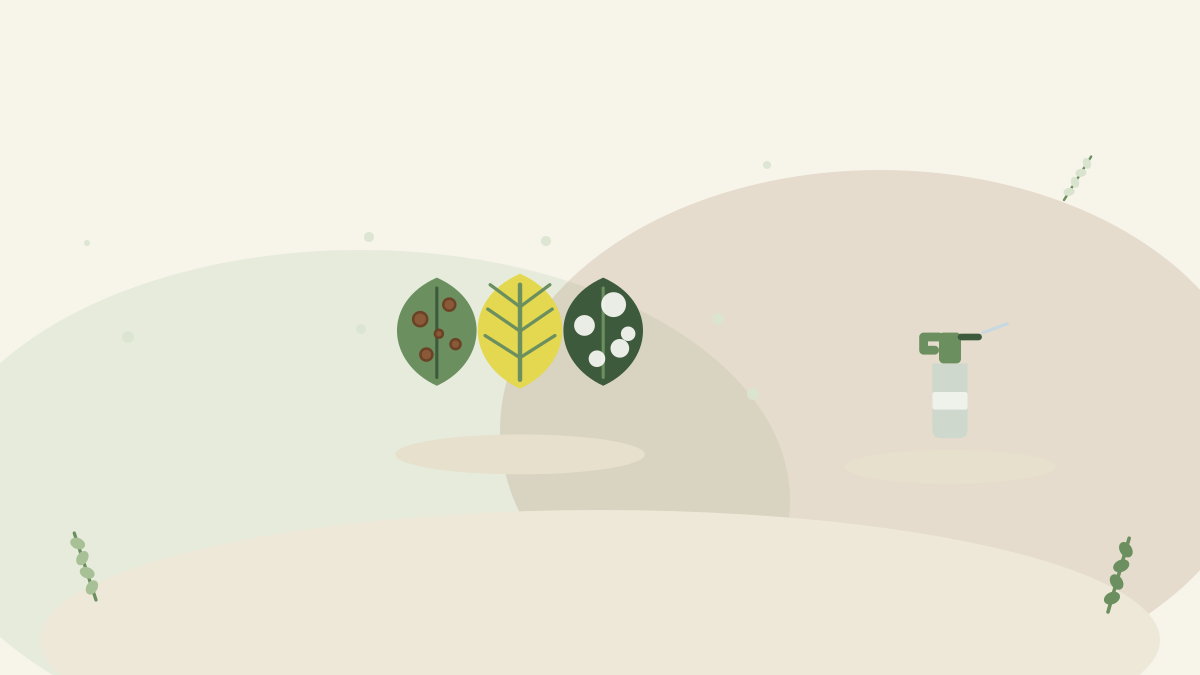
- Thrips are the near-invisible ones: slender, minute insects you often never see, diagnosed instead by their damage — silvery, stippled, streaked leaves and petals, tiny black excrement dots, and distorted new growth. They burrow into flowers and tips, which is what makes them so hard to reach.
Both weaken plants by sap-sucking, both can spread plant viruses (thrips especially), and both breed fast enough that a small problem becomes a large one in a week or two if ignored.
The Habit That Changes Everything: Look Underneath
If this guide gives you one thing, let it be a reflex: turn leaves over and inspect them closely, regularly. Because both pests live where you don't naturally look, the gardeners who beat them are simply the ones who find them early. Build the inspection into your routine — a glance at leaf undersides and growing tips whenever you water, paying special attention to new and soft growth where thrips congregate and to the sheltered undersides where whitefly breed. Use the FAQ's diagnostic tricks: disturb the plant and watch for the whitefly cloud; tap a flower or leaf over white paper and watch for the tiny moving slivers of thrips. Early detection turns a ten-minute fix into a non-event; late detection turns it into a campaign. This single habit is worth more than every product in the rest of this article.
Sticky Traps: Your Early-Warning System
The FAQ's verdict in practice: sticky traps are primarily a monitoring tool and secondarily a control, and their monitoring value is where they truly shine.
- Hang them among your plants — yellow for whitefly, blue for thrips (thrips are more drawn to blue) — and they catch the first flying adults, telling you an infestation is beginning before you'd otherwise notice.
- As control, they knock back the flying adults, reducing the breeding population — a real but partial effect, since they can't touch eggs, larvae, or the pests hidden in flowers.
- Read them like a dashboard: a sudden rise in catches means the population is climbing and it's time to escalate to sprays or biologicals. A trap that stays clear is reassurance you can trust.
- Place them at plant height and refresh when covered; in a greenhouse they're close to essential monitoring kit.
Sprays: The Contact Discipline
The FAQ's safe sprays — insecticidal soap, horticultural oil, neem — work, but only with the contact-and-repeat discipline that most people skip:
- Spray thoroughly underneath, not just over the top — these are contact killers, and the pests are on the undersides and in the tips, so top-only spraying misses the actual infestation.
- Repeat every few days, several times, to catch newly hatched young and the stages the last spray missed — the fast overlapping generations from the FAQ are exactly why one spray never finishes the job.
- Test on a small area first, and spray in cool, shaded conditions to avoid leaf scorch — soap and oil can burn foliage in strong sun.
- Favour the gentle options — soap and oil over harsh insecticides — because the harsh sprays also kill the beneficial insects providing free background control, and resistance builds against overused chemicals.
For thrips especially, which hide deep in flowers, sprays reach less of the population — one more reason they're a layer in the stack rather than a standalone answer.
The Biological Layer: Allies That Reach Where You Can't
- Whitefly have a dedicated parasite: the tiny wasp Encarsia formosa is a classic, effective biological control in greenhouses and conservatories, parasitizing whitefly where sprays can't reliably reach. It's a mainstay of commercial glasshouse growing for good reason.
- Thrips meet predatory mites and pirate bugs: several commercially available predators hunt thrips in their hiding places, providing the constant pressure that reaches into flowers and tips.
- The general beneficials help too: ladybirds, lacewings, and hoverfly larvae all take whitefly and thrips as part of a mixed diet — which is precisely why the no-blanket-spray policy matters. Kill your allies with harsh chemicals and you inherit their entire workload.
- Biologicals suit enclosed spaces best (greenhouses, conservatories, indoor collections) where introduced predators stay put — outdoors they disperse, but the wild beneficials you protect do the equivalent job.
Whitefly and Thrips Indoors and Under Glass
Both pests thrive in the warm, still, sheltered conditions of greenhouses and indoor plant collections — which is where they're most often a serious, recurring problem. The enclosed-space playbook: quarantine every new plant before it joins the collection (the FAQ's re-arrival point — most infestations walk in on a new purchase), run sticky traps permanently as monitoring, keep humidity and airflow sensible, and deploy biological controls, which work far better in an enclosed space than outdoors. For houseplants, the shower-and-inspect routine from the houseplant pest playbook applies: isolate the affected plant immediately, treat thoroughly and repeatedly, and check its neighbours, because both pests spread plant to plant with ease. A greenhouse or windowsill jungle is a paradise for these pests precisely because it's a paradise for the plants — vigilance is the rent.
Understanding the Life Cycle (Why Timing Matters)
Both pests defeat casual treatment because of how they breed, and understanding it turns random spraying into effective control. Whitefly lay eggs on leaf undersides that hatch into immobile scale-like nymphs — which sprays targeting flying adults completely miss — before maturing into the next generation of adults, all within a couple of weeks in warm conditions. Thrips run a similar fast cycle, with larvae feeding alongside adults and a pupal stage often spent in the soil or leaf litter, out of reach of foliar sprays entirely. This is why the repeat-treatment discipline isn't optional: a single spray hits only the vulnerable stages present that day, and the eggs and protected stages simply repopulate. Treating every few days for several weeks catches successive generations as they become vulnerable — and pairing sprays (which hit the exposed stages) with biological controls (which reach the hidden ones) covers the whole cycle in a way neither does alone.
Which Plants Suffer Most
Both pests have favourites, and knowing them sharpens your inspection. Whitefly gravitate to soft-leaved plants under glass and indoors — tomatoes, peppers, cucumbers, and fuchsias are classic magnets, and many houseplants host them readily. Thrips have an enormous host range but hit flowers and soft new growth hardest, making them a particular menace on ornamentals (they streak and distort petals), on onions and leeks (where they cause silvery leaf damage), and on a wide range of vegetables and houseplants. The practical upshot: give these known targets extra inspection attention, quarantine them especially carefully when newly bought, and don't be surprised when an infestation on one susceptible plant spreads to its neighbours. Knowing which of your plants are the likely first victims means you check them first and catch trouble early — which, as ever with these two, is the whole game.
Prevention and Realistic Expectations
| Practice | Why it matters |
|---|---|
| Quarantine new plants | Most infestations arrive on new purchases — isolate and inspect before introducing |
| Regular underside inspection | Early detection is the whole game — finds problems while they're small |
| Permanent sticky-trap monitoring | The dashboard that tells you when to act, especially under glass |
| Protect beneficial insects | Free, constant background control — don't kill your allies with harsh sprays |
| Plant vigour and airflow | Healthy, uncrowded plants resist and recover better; stressed ones succumb |
| Prompt, repeated treatment | Fast breeders reward persistence and punish the one-and-done spray |
And the honest expectation from the FAQ: the goal is management, not eradication. These pests breed fast, hide well, and re-arrive — "gone for good" isn't realistic, but "kept in check so plants thrive" absolutely is. Persistence and early spotting beat them; heroic single sprays don't.
Companion Planting and Cultural Defences
Beyond direct treatment, a few cultural habits quietly tilt the odds against both pests. Reflective mulches (even a strip of foil-faced material in a bad spot) confuse and deter thrips and whitefly seeking their host plants — a low-tech trick borrowed from commercial growers. Some gardeners plant "trap crops" that pests prefer, drawing them off the plants that matter, and interplanting with strongly aromatic herbs and flowers can muddle pest navigation the way it does with aphids, while also drawing the beneficial insects that hunt them — the diverse, flower-rich, pesticide-light garden the whole site keeps advocating is itself a background defence. None of these is a standalone cure, but stacked with inspection, traps, and gentle sprays they raise the whole garden's resistance. And the simplest cultural defence of all remains plant health: a vigorous, well-watered, unstressed plant shrugs off a level of pest pressure that would overwhelm a struggling one, which is why good general care is quietly the first line of pest defence.
The Classic Mistakes
- Only looking at the tops of leaves while the infestation breeds underneath.
- Spraying once and assuming victory against fast-overlapping generations.
- Top-only spraying that misses the pests on the undersides and in the tips.
- Reaching for harsh chemicals that kill the beneficial insects working for free.
- Skipping quarantine and introducing infested new plants to a clean collection.
- Ignoring early sticky-trap catches until the numbers have exploded.
The Bottom Line
Whitefly and thrips win by being overlooked, so the whole strategy is to stop overlooking them: build the leaf-underside inspection into your routine, hang sticky traps as an early-warning dashboard, and act the moment numbers rise. Treat with the gentle contact sprays — soap, oil, neem — applied thoroughly underneath and repeated to catch the fast generations, and back them with the biological allies and wild beneficials that reach where sprays can't. Quarantine new plants, protect your insect allies, and accept the honest goal of ongoing management over impossible eradication. Do that, and the pests you can barely see stop being the ones that quietly wreck your plants.
Comments
No comments yet. Be the first to share your experience.