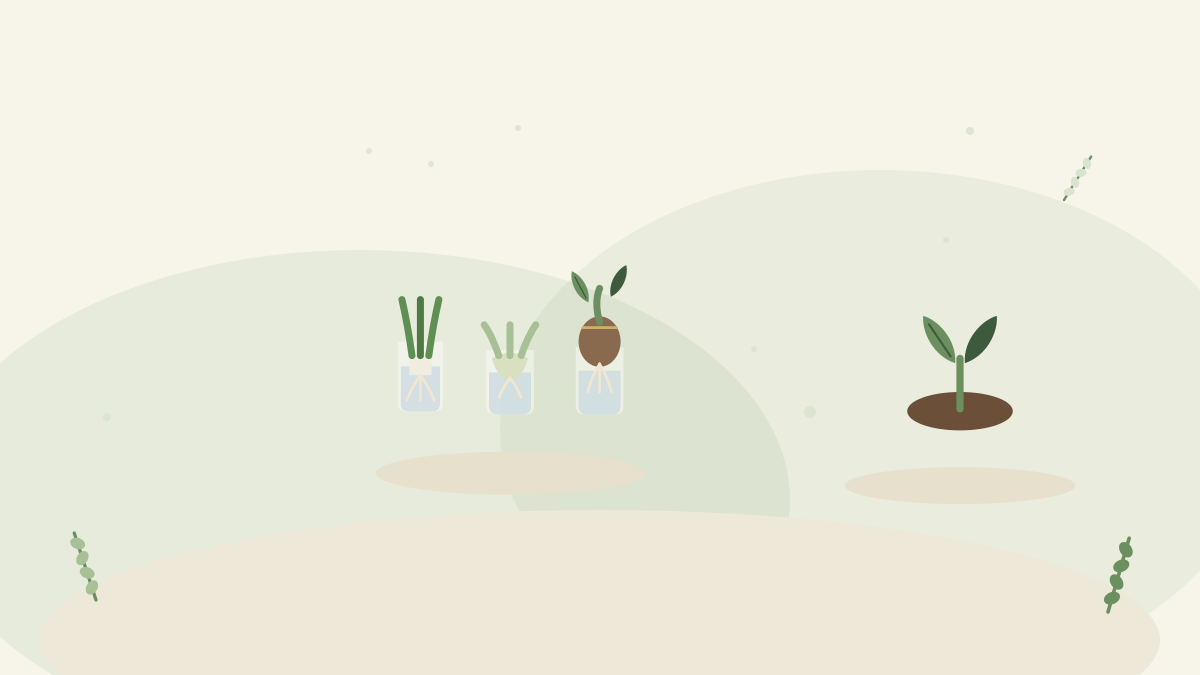
Regrowing food from kitchen scraps is one of the most shared ideas in gardening, and one of the least honestly assessed. Plenty of it works in the narrow sense that something grows — a root appears, a shoot emerges, the picture looks good — without ever producing anything you would actually eat.
That is worth sorting out, because the reliable wins are genuinely useful and the misleading ones put people off propagation entirely when nothing comes of them. This guide separates the scraps that reliably produce food, the ones that produce plants, and the ones that are best sent to the compost bin — plus the method that makes the difference between a rooted scrap and a lasting plant.
The Reliable Wins
These share one thing: you are regrowing leaves from an existing root or stem base, not building a whole plant from scratch.
| Scrap | Method | Realistic result |
|---|---|---|
| Spring onion bases | Stand the white root end in a little water, or plant in compost | New green shoots within days; several cuttings before flavour weakens. The best of the lot |
| Leek bases | As above | Similar; slower but reliable |
| Shop-bought herbs | Take cuttings from soft stems (basil, mint) and root in water or damp compost | Full plants — the biggest win here, and covered in the herb and cuttings guides |
| Sprouted garlic | Plant the clove | Green garlic shoots; a full bulb if planted at the right season and left |
| Ginger and turmeric | Plant a piece with visible buds in compost, kept warm | Shoots, and eventually more rhizome — slow but genuine |
| Lettuce and celery stumps | Base in shallow water, then into compost | A modest amount of small leaves — usable, but not a head of lettuce |
| Potatoes that have sprouted | Plant as seed potatoes | Works, with the caveat the potato guide gives about disease in supermarket tubers |

The Method: Water to Start, Soil to Grow
The FAQ makes the distinction that most guides skip, and it explains a lot of disappointment:
- Water is good for starting. It is easy, visible, and satisfying — genuinely useful for spring onions used within a few weeks.
- Water is poor for growing on. Plain water contains almost no nutrients, so a plant kept in it indefinitely stalls; and water-formed roots are structurally different from soil-formed ones and often struggle at transplanting.
- Move to compost as soon as roots appear — a few centimetres is enough. Keep it well watered while it adjusts.
- For herbs and cuttings, going straight into damp compost frequently gives stronger plants than the water route, even though watching roots form in a glass is more fun.
- Change the water daily while anything is standing in it, or it goes cloudy and the base rots — the same bacterial problem the cut flower guide describes.
- Give it light. A bright windowsill; scraps on a dark counter produce pale, weak growth, per the houseplant light guide.
The Ones That Grow But Do Not Feed You
The FAQ is direct about this, and it deserves stating plainly because these are the most-shared examples:
- Avocado stones germinate readily and make attractive houseplants. Fruiting takes many years, needs a climate most homes cannot provide, and a seedling does not reproduce the parent variety since commercial trees are grafted.
- Citrus pips — the same story: easy to germinate, slow to mature, and the fruit from a seedling is usually poor.
- Mango, date and other tropical stones — good foliage plants, no realistic fruit in a temperate climate.
- Pineapple tops root and grow into handsome plants; fruiting is a multi-year project needing consistent warmth.
- Apple pips grow, but seedlings do not come true and take many years to fruit — which is exactly the F1 and grafting issue the seed saving and fruit guides explain.
None of this is a waste of time — they are excellent houseplants and an excellent way to show children how germination works. The point is to know you are growing a houseplant, so the expectation matches the result.

What Not to Bother With
- Carrot and beetroot tops — they produce leaves, which are edible, but the root never regrows. Fine as a curiosity; not food production.
- Onion bottoms (as opposed to spring onions) — often rot rather than regrow.
- Most fruit and vegetable seed from the supermarket — frequently F1 hybrids, so seedlings vary unpredictably, and shop tomatoes and peppers are often picked from varieties bred for transport rather than flavour.
- Anything already soft, mouldy or treated — some produce is treated to suppress sprouting.
- Woody herb stems from the shop, which root far less readily than soft ones — take the soft tips instead.
And the important framing: a scrap that will not regrow is not wasted. It goes in the compost bin or worm bin and becomes something the garden can genuinely use, which the food waste and composting guides would call the better outcome anyway.
Seeds Worth Saving From the Kitchen
Alongside regrowing, a few kitchen seeds are genuinely worth sowing — with the seed saving guide's caveats attached. Tomato seed from a good open-pollinated fruit works well if you ferment and dry it properly, though most supermarket tomatoes are F1 hybrids and will not come true. Chilli and pepper seed germinates readily and is one of the more reliable kitchen sowings, again subject to the hybrid question. Squash and pumpkin seed germinates enthusiastically but crosses so promiscuously that the result is unpredictable — fun rather than dependable. Dried pulses from a packet, including chickpeas and some beans, will often germinate and grow, and are cheap enough to experiment with. Whole spices such as coriander seed sown as a crop work perfectly well, since coriander seed is simply coriander seed. The general rule is the one the seed saving guide sets out: seed from an open-pollinated variety comes true, seed from an F1 hybrid does not, and the supermarket rarely tells you which you have — so treat kitchen seed as an experiment with occasional pleasant surprises.
Getting More From Shop-Bought Plants
The single most productive version of this idea is not a scrap at all — it is the pot of herbs on the supermarket shelf. As the herb guide explains, those pots contain dozens of seedlings crammed together and forced for quick sale, which is why they collapse within a fortnight. Divided into two or three clumps and potted into fresh compost, the survivors often go on for months. And soft-stemmed herbs such as basil and mint root readily from cuttings taken off a shop bunch, turning a single purchase into permanent plants. The same principle applies to a bunch of cut herbs: pick the freshest soft stems, strip the lower leaves, and root them in water or damp compost. For basil in particular this works reliably enough that buying one bunch can be the last basil you ever buy.
Sprouting and Microgreens: The Genuinely Productive Version
If the appeal of scrap-growing is fresh food from a windowsill with no garden, there is a version that actually delivers quantity — and it uses seed rather than scraps. Sprouting seeds in a jar produces edible sprouts within days from beans, lentils, alfalfa and similar, needing nothing but rinsing twice daily and good drainage. Microgreens — seedlings of salad, brassicas, radish, peas and herbs harvested at the first-leaf stage — grow in a shallow tray of compost on a windowsill and are ready in one to three weeks, giving genuinely useful quantities of intensely flavoured leaves in almost no space. Both are far more productive per week and per centimetre than anything regrown from a scrap, both suit flats with no outdoor space at all, and both work year-round indoors. Two practical cautions: use seed sold for sprouting or growing rather than seed treated for sowing outdoors, and keep sprouting jars scrupulously clean and well drained, since warm damp conditions favour bacteria as well as germination.
Realistic Expectations
| Genuinely worthwhile | Mildly worthwhile | Enjoyable experiment |
|---|---|---|
| Spring onions | Sprouted garlic | Avocado, citrus, mango |
| Herb cuttings and divided herb pots | Ginger and turmeric | Pineapple tops |
| Lettuce and celery stumps | Carrot tops for foliage |
The honest summary: this is a good entry point into propagation and a small saving on a couple of specific items, rather than the free-food system it is often presented as. For real quantity, the seed sowing, cuttings and division guides are where the productive methods live — and a packet of spring onion seed costs less than one bunch and produces vastly more than any regrown base.
Cuttings From the Fruit Bowl and Veg Rack
Beyond the classic scraps, a few less-obvious kitchen items propagate genuinely well. Soft fruit bought as plants is expensive, but a friend's blackcurrant or gooseberry provides hardwood cuttings in winter that root readily — not a kitchen scrap, but the same free-plant instinct applied where it pays. Sweet potato will sprout shoots (slips) from a tuber suspended in water, and those slips can be detached and grown on, which is how sweet potatoes are conventionally propagated. Lemongrass stems with the base intact root in water and grow into full clumps in a warm spot. Watercress from a bunch roots easily and grows on in very wet compost or a tray of water. And mint from any bunch roots within days in a glass. The common factor in every success here is the same one the layering and cuttings guides identify: you are propagating from living stem or root tissue that still has the capacity to grow, rather than asking a piece of fruit to become a plant.
Doing It With Children
This is where scrap-growing genuinely excels, and it is worth doing for that reason alone. The results are fast and visible — spring onion shoots appear within days, and roots forming in a clear glass are far more compelling than anything happening underground in a pot. The materials are free and unlosable, so there is no cost to a failure and no reason not to try again. And the range of outcomes teaches something real: some things grow, some do not, and the ones that grow do not always do what you hoped. Start with spring onions for guaranteed early success, add an avocado stone for the long game, and let a lettuce stump demonstrate that a plant regrows from its base. The kids' room and organization guides make the point that children engage with systems they can reach and see — the same applies here, so keep the glasses at their eye level and let them do the water changes.
The Classic Mistakes
- Leaving plants in water indefinitely, where they stall and starve.
- Not changing the water, so the base rots.
- Expecting fruit from avocado, citrus and mango seedlings.
- Growing scraps in poor light and getting pale weak shoots.
- Treating it as a food strategy rather than a propagation exercise.
- Planting supermarket potatoes without knowing the disease caveat.
- Composting nothing, and letting failed experiments go to the bin instead of the heap.
The Bottom Line
Kitchen scrap growing works best when you know which category you are in. Spring onions and shop-bought herbs are the genuine wins — cheap, fast, productive, and worth doing permanently. Garlic, ginger, lettuce and celery stumps are mildly useful. Avocado, citrus and mango are houseplants with a long and probably fruitless future, which is fine as long as that is what you expected. Start scraps in water if it helps you see progress, but move them into compost as soon as roots appear, give them a bright windowsill, and change the water daily until they leave it. Send everything that will not regrow to the compost bin, where it does more good than it would on a saucer — and treat the whole exercise as a first step into propagation rather than a route to free food.



Comments
No comments yet. Be the first to share your experience.