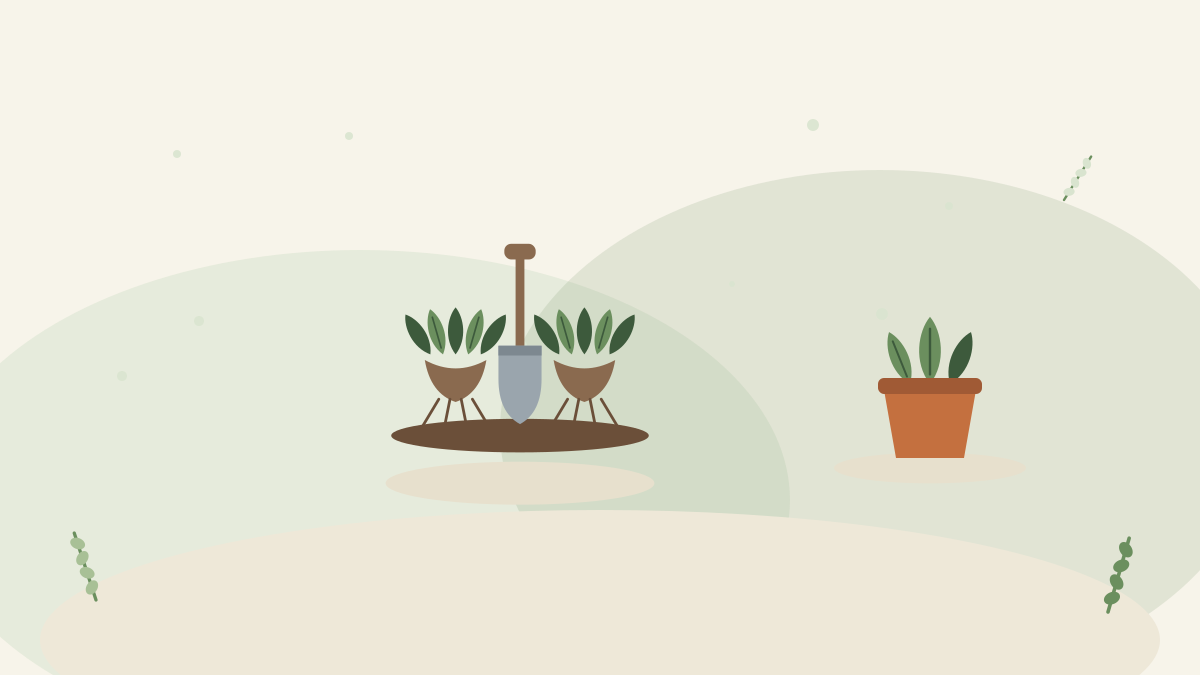
Most propagation asks for faith. You take a cutting, put it somewhere warm, keep it humid, and wait weeks to discover whether anything happened. Division asks for nothing but a spade. You dig up a clump, split it into pieces, replant them, and walk away with three plants where you had one — visible, immediate, and with a success rate that makes every other method look temperamental.
It is also the only propagation technique that improves the parent plant. A congested clump with a bare middle and dwindling flowers is a plant asking to be divided, and the division that gives you free plants is the same operation that rejuvenates the original. This guide covers when to do it, how to split different kinds of plants, what to do in the crucial hours afterwards, and which plants to leave well alone.
Why Division Is the Best Propagation Method
- Instant results: the divisions are already whole plants with roots and shoots — no rooting period, no uncertainty, no propagator required.
- High success rate: done at the right time with decent aftercare, division works almost every time, which cannot honestly be said of cuttings or seed.
- It rejuvenates the parent: the FAQ's bare-centre problem is cured by the same act that multiplies the plant.
- True to type: divisions are clones of the parent, so named varieties come true — unlike seed, which may not.
- Free plants at scale: a single mature clump can fill a border, and dividing regularly is how gardeners build up drifts of the same plant, which is exactly what the garden design guide's repetition principle asks for.
When to Divide
The FAQ's timing rule is worth memorising in its short form: divide spring-flowering plants in autumn, and autumn-flowering plants in spring — in other words, not while the plant is putting on its show, and when conditions favour recovery. Spring divisions get the whole season to establish; autumn divisions benefit from warm soil and reliable rain.
Avoid the extremes: high summer, when a root-reduced plant cannot find water, and frozen or waterlogged winter ground. Houseplants are more flexible and are usually divided at repotting time, ideally in spring as growth resumes. And when a plant is genuinely failing, out-of-season division with shade and generous watering is still usually better than watching it decline.
Reading the Signs: Does It Need Dividing?
| Sign | What it means |
|---|---|
| Bare or dead centre, growth only at the edges | The classic signal — the clump has exhausted its middle |
| Fewer flowers than previous years | Congestion: the plant is competing with itself |
| Outgrown its space, crowding neighbours | Reason enough on its own |
| Pot full of dense crowns (houseplants) | Divide at the next repot |
| Looks great, flowers well | Leave it alone — division is a remedy, not a routine |
How to Divide, By Plant Type
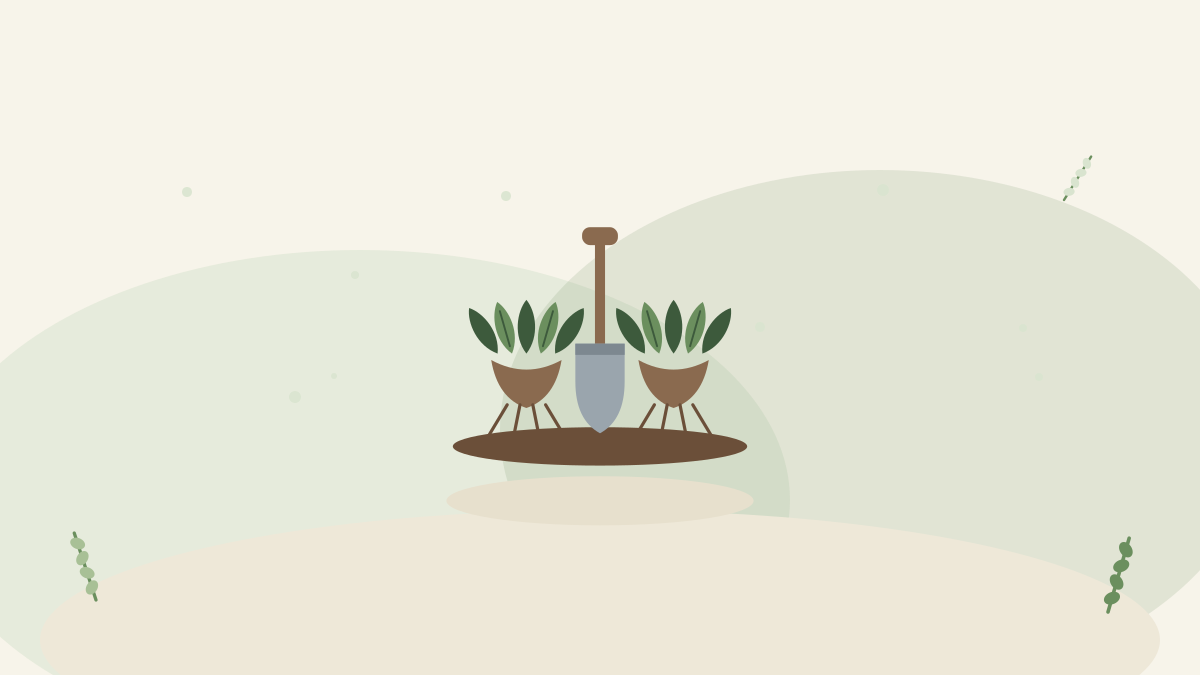
- Water the plant well the day before — a hydrated plant divides and recovers far better than a dry one.
- Lift the whole clump with a fork, working around it and levering it up with as much root as you can manage. (Very large clumps can be divided in situ by slicing off sections with a spade if lifting is impractical.)
- Shake or wash off enough soil to see the structure — where the crowns, growing points and roots actually are.
- Split according to toughness, per the FAQ:
- Soft, fibrous clumps (many herbaceous perennials, houseplants) often pull apart by hand or with two hand forks back-to-back.
- Tough, woody clumps (established grasses, older perennials) may need a spade driven through the crown, or a saw — and this is normal, not brutality.
- Offsets and pups (many houseplants, some succulents) simply detach with their own roots.
- Rhizomes and tubers are cut into sections, each with a growing point and healthy tissue.
- Discard the exhausted old centre where there is one — it will never perform as well as the vigorous outer material.
- Ensure every division has roots and at least one growing point. This is the one non-negotiable rule of division.
- Keep the pieces from drying out while you work — a damp sack, a shady spot, or simply working quickly.
On size: smaller divisions succeed but take longer to look like anything; larger ones re-establish quickly and may flower the same season. Choose according to whether you want maximum numbers or fastest results.
The Hours After: Aftercare That Decides Success
The FAQ's aftercare list is where most failures are prevented:
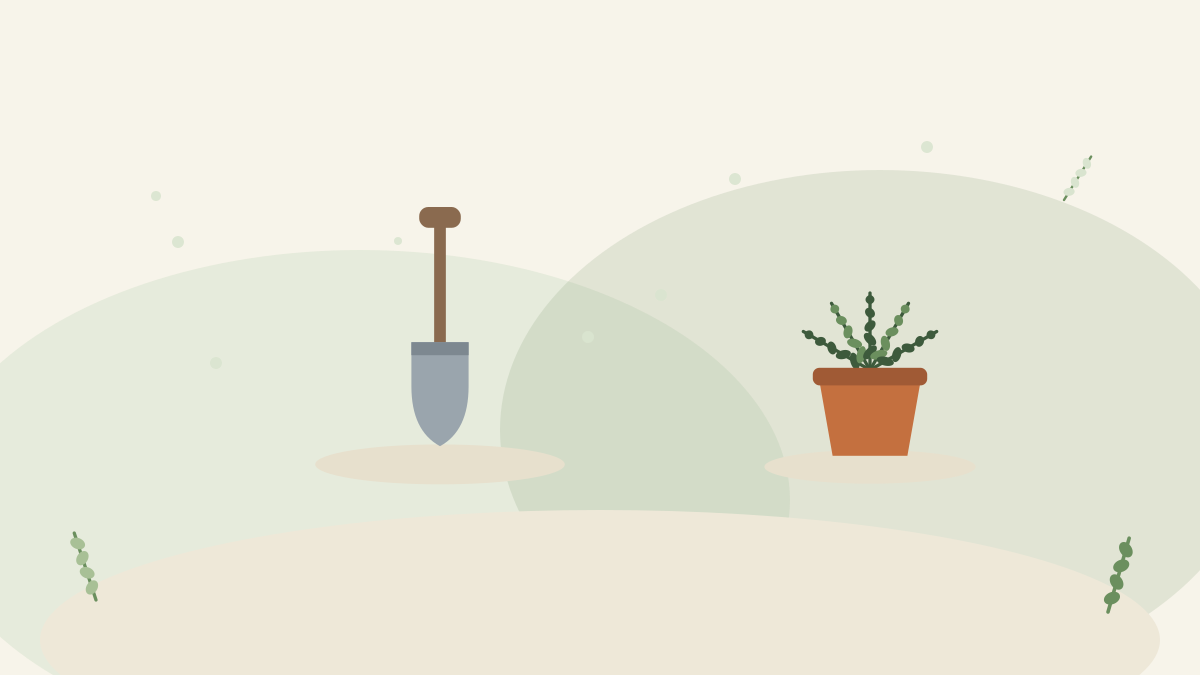
- Replant promptly, at the same depth as before, into prepared soil or pots — drying out is the number one killer of divisions.
- Firm gently and water thoroughly, then keep consistently moist for the following weeks while roots re-establish.
- Trim back excess top growth — reducing foliage by a third or more balances the reduced root system and cuts water stress dramatically.
- Shade in hot, bright weather for the first week or two.
- Do not feed immediately: damaged roots take up fertiliser poorly and can be scorched. Wait for new growth, then feed normally.
- Expect a modest first season. Divisions typically spend a year re-establishing before returning to full performance — this is normal, not failure.
What to Divide — and What to Leave
| Group | Verdict |
|---|---|
| Clump-forming herbaceous perennials | Ideal candidates — most benefit from division every few years |
| Ornamental grasses | Divide readily, usually in spring; tough clumps need a spade or saw |
| Bulbs that multiply into congested clumps | Lift and separate when flowering declines |
| Many houseplants (clumping ferns, calatheas, spider plants, peace lilies) | Divide at repotting — one of the easiest houseplant multiplications |
| Plants with offsets or pups (many succulents, some bromeliads) | Detach once they have their own roots — the succulent guide's method |
| Taprooted perennials | Generally do not divide well — propagate by seed or cuttings instead |
| Woody shrubs and trees | Not division candidates — use cuttings, layering or seed |
| Single-stemmed and non-clumping plants | Nothing to divide — the cuttings guide is the route |
The simple test: if a plant naturally forms multiple crowns or a spreading clump, it can probably be divided. If it grows from a single stem or a taproot, it cannot.
Dividing Houseplants
Division is the most underused houseplant propagation method, and often the easiest. Many popular houseplants — clumping ferns, peace lilies, spider plants, calatheas, and anything producing multiple crowns from the soil — can simply be knocked out of the pot at repotting time and teased or cut into pieces, each with roots and shoots, then potted individually. The technique is identical to the garden version at smaller scale: water beforehand, expose the structure, split, replant at the same depth in fresh compost, water in, and keep them out of harsh light while they settle. Spring is the best moment, as growth resumes. Since the parent plant was probably being repotted anyway, division costs nothing but a few extra minutes and turns one pot-bound specimen into several plants — for the windowsill, or for giving away, which is how most houseplant collections quietly grow.
Tools, Hygiene and Handling
- A spade, a fork, and two hand forks cover almost every division. A knife or old pruning saw handles the woodiest clumps, and none of this needs to be specialist equipment.
- Sharp and clean matters, as everywhere on this site: clean cuts heal faster than crushed tears, and wiping blades between plants avoids carrying disease from one clump to another — particularly worth doing when dividing houseplants or anything that has been struggling.
- Work in cool, dull conditions where you can. Dividing on a hot, bright, windy afternoon dries roots in minutes; an overcast day or the cool of evening is far kinder to the pieces.
- Have the destination ready first. The gap between lifting and replanting should be as short as possible, so prepare the new planting positions or pots before you lift anything.
- Label divisions if you are moving several varieties at once — a season later, nobody remembers which unlabelled clump was which.
Why Division Works So Reliably
It helps to understand why this method succeeds where others are temperamental. A cutting has to make roots before it can support itself, which is the risky, uncertain part of propagation and the reason cuttings need humidity, warmth and patience. A division skips that entirely: each piece already has functioning roots attached to functioning shoots, so it is not creating a new plant so much as separating an existing one into parts that were already semi-independent. Many clump-forming perennials are, in effect, colonies of individual crowns growing side by side — dividing simply formalises what the plant was already doing. That is also why the aftercare focuses on water rather than warmth or humidity: the challenge is not root formation but keeping a reduced root system supplied while it re-establishes contact with the soil. Understanding that makes the rules intuitive rather than arbitrary — every division must carry roots and a growing point, must not dry out, and must be kept watered until the roots take hold.
Building a Garden From Divisions
Division is how experienced gardeners fill borders cheaply, and it is worth thinking of as a long-term strategy rather than a one-off task. Buy one good plant, grow it well for a few years, divide it, and you have several — repeat and you have the drift of a single variety that the garden design guide keeps recommending, achieved for the price of one plant and some patience. The same logic makes plant swaps and gifts the traditional currency of gardening: almost every generous gardener's borders contain plants that arrived as divisions from someone else's. It is also the most sustainable propagation there is — no pots, no compost, no transport, no purchase — which fits neatly alongside the site's wider preference for using what you already have. If there is one habit worth adopting from this guide, it is looking at a thriving clump not as a finished plant but as next year's three plants.
Troubleshooting
- Divisions wilt badly after replanting: usually water stress with reduced roots. Trim foliage further, shade them, keep moist — most recover.
- Nothing grows from a division: it probably lacked a growing point, or dried out before replanting. Both are preventable next time.
- The division sulks all season: normal. Judge it next year, not this one.
- Rot after division: often from replanting too deep or into waterlogged ground — plant at the original depth and improve drainage.
- Original clump looks worse than before: it will have lost roots too; treat the parent as a division and give it the same aftercare.
The Bottom Line
Division is gardening's best bargain: free plants, a rejuvenated original, and results the same afternoon rather than months later. Watch for the bare centre and the fading flowers that mean a clump is ready, divide in spring or autumn according to when the plant flowers, and split with whatever force the plant's toughness actually demands — making sure every piece carries both roots and a growing point. Then replant immediately, trim the top growth, water generously, and leave the feeding until new growth appears. Do that every few years across your borders and houseplants, and your garden fills itself — with better plants than the ones you started with.
Comments
No comments yet. Be the first to share your experience.