Most garden problems have visible causes. pH does not — which is why it accounts for so many of the quiet, unexplained failures: the shrub that never thrives despite good soil and care, the plant that yellows between the veins whatever you feed it, the thing that grows beautifully three streets away and sulks in your garden.
pH governs what a plant can absorb rather than what the soil contains, which is the counterintuitive part. Soil can be full of a nutrient that is entirely unavailable to roots because the pH locks it up. This guide explains what that means in practice, how to test in ten minutes, and — the important conclusion — why matching plants to your soil beats trying to change it.
What pH Actually Controls
- The scale: 7 is neutral, below is acidic, above is alkaline. Most garden plants prefer somewhere in the slightly acidic to neutral range.
- Nutrient availability is the mechanism that matters. At the wrong pH, nutrients present in the soil become chemically unavailable to roots — the plant starves in the middle of plenty.
- Iron is the classic case: acid-lovers in alkaline soil yellow between the veins because they cannot take up iron, however much is there. The plant diagnosis guide flags this exact pattern.
- Soil life is affected too, along with the rate organic matter breaks down — so pH underlies a lot of soil behaviour invisibly.
- Most plants are tolerant. The fussy ones sit at the extremes, and they are the ones that reveal your pH by failing.
Why pH Gets Blamed for Everything
One caution before reaching for the lime or the sulphur: pH is genuinely important, but it is also over-diagnosed by gardeners who have just learned about it. A great many problems attributed to pH turn out on inspection to be waterlogging, compaction, drought, root damage or simple unsuitability of the plant to the site — all of which produce symptoms that resemble nutrient deficiency, because damaged or drowning roots cannot take up nutrients regardless of what the pH is. The diagnosis guide's sequence applies here in full: check water, light and roots before concluding that soil chemistry is the culprit. pH is worth testing precisely because it is cheap and definitive, which means you can rule it in or out in ten minutes rather than speculating — and if the reading is unremarkable and the plant is still struggling, the answer is somewhere else entirely.
Testing: Ten Minutes, Once
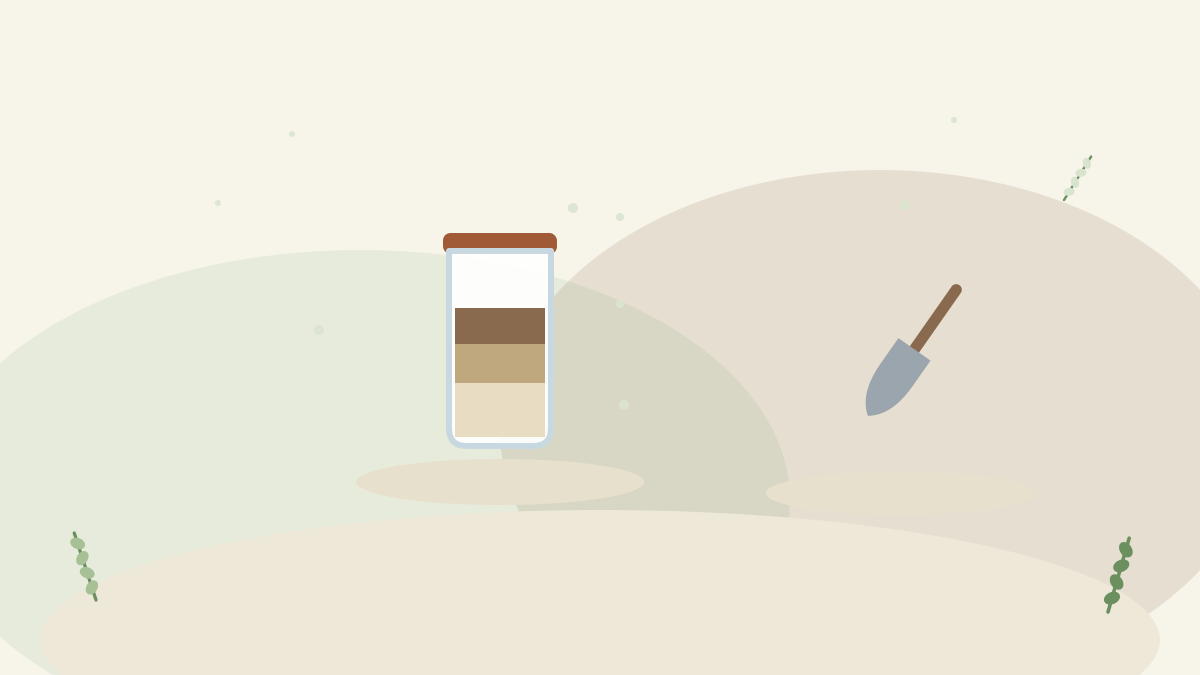
The FAQ covers the methods; the sampling technique matters more than the kit:
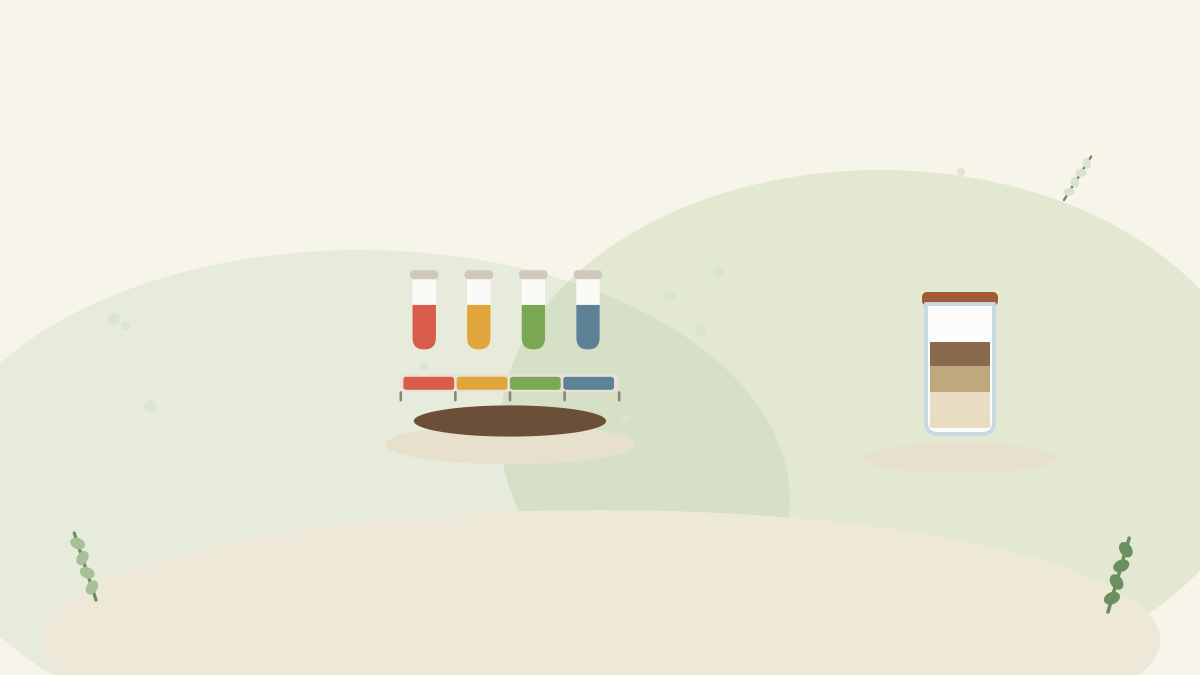
- Take several small samples from around the garden rather than one from a convenient spot.
- Sample at spade depth, not from the surface, which is not representative.
- Test distinct areas separately — pH genuinely varies within one garden, particularly near walls and old building work, where mortar raises it.
- Use a chemical kit for a reliable indication; treat cheap probe meters as approximate.
- Read the free indicators too: what thrives in neighbouring gardens and locally is strong evidence. A street of healthy rhododendrons and camellias means acidic soil; chalky ground and widespread yellowing on acid-lovers means alkaline.
For most gardens this is a once-in-several-years exercise, and it answers a question that otherwise causes years of unexplained failures.
What Grows Where
| Soil | Plants that thrive | Plants that struggle |
|---|---|---|
| Acidic | Rhododendron, azalea, camellia, pieris, blueberry, heather, many conifers | Lavender and many Mediterranean herbs; brassicas can suffer |
| Neutral to slightly acidic | The great majority of garden plants and vegetables — the comfortable middle | Only the specialists at either extreme |
| Alkaline | Lavender, many Mediterranean herbs, clematis, lilac, many pinks and dianthus | All the acid-lovers above — the group that yellows and sulks |
The practical reading: if you are in the middle, almost everything is open to you, and pH is not worth worrying about beyond knowing it. If you are at an extreme, it explains a great deal and should shape what you plant.
Changing pH: Honest Expectations
The FAQ is deliberately discouraging, and the reasoning is worth spelling out:
- Raising pH (less acidic) is the more achievable direction, traditionally with lime applied per the product instructions and soil type. Effects take months and need repeating over years.
- Lowering pH (more acidic) is considerably harder, especially over chalk, where the underlying geology keeps pushing it back. Sulphur-based products and acidifying organic matter help gradually and temporarily.
- Neither is permanent. You are working against the natural tendency of the site, indefinitely.
- Over-correction is a real risk, and creates its own nutrient lock-up problems.
- Organic matter helps regardless — compost and mulch buffer pH extremes slightly and improve nutrient availability generally, which is one more reason the soil-feeding advice runs through every guide on this site.
The better strategy is almost always to work with your soil rather than against it. Choosing suitable plants is instant, free and permanent; adjusting pH is slow, partial and ongoing.
What Determines Your Soil's pH
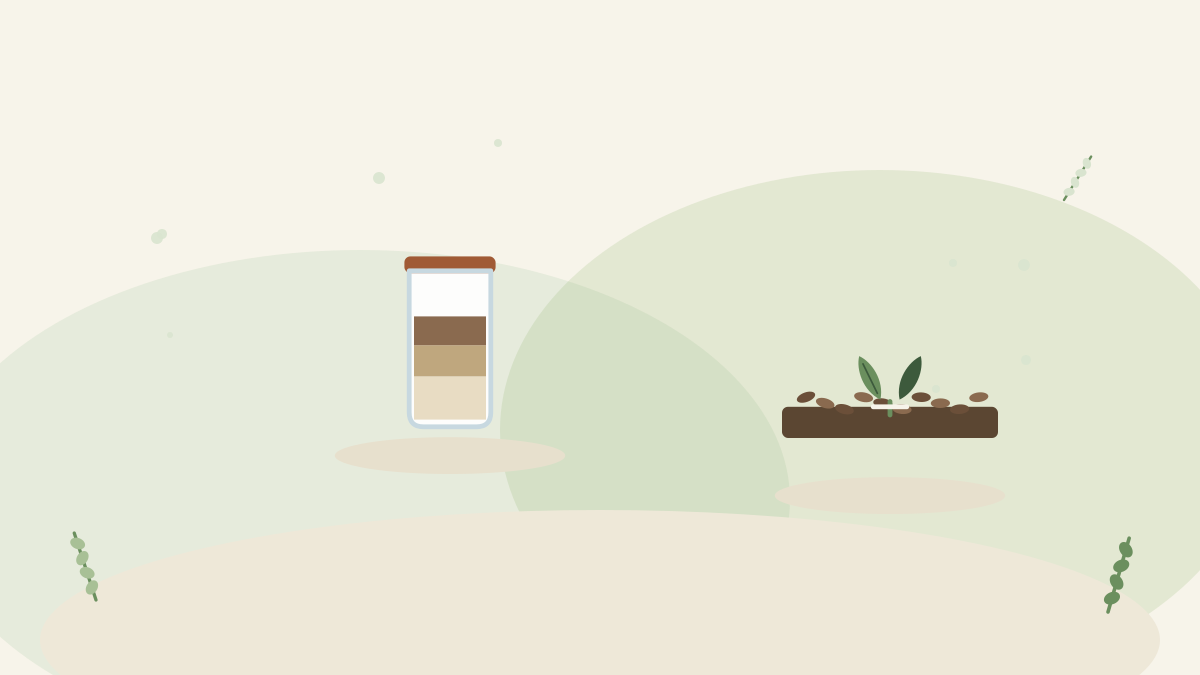
pH is not random, and understanding where yours comes from explains why it resists change. The dominant factor is underlying geology — soils over chalk and limestone are alkaline because the rock beneath continually supplies calcium carbonate, while soils over sandstone, granite and peat tend toward acidic. That is why attempts to acidify a chalky garden are a permanent struggle: you are arguing with the bedrock. Rainfall pushes soil gradually toward acidity over time by leaching out alkaline minerals, which is why high-rainfall regions tend to be more acidic. What has been added over the years matters too: decades of lime application, or of acidic organic matter such as pine needles and composted bark, both shift things. And building materials are a common local cause — mortar, concrete and rubble near walls, paths and old foundations raise pH noticeably, which is why a bed against a house wall can behave quite differently from one ten metres away. Knowing which of these applies to your garden tells you whether your pH is a fixed constraint or a modifiable one.
The Container Solution
For the plants you want but your soil will not support, containers solve it completely — the FAQ's practical answer. Blueberries, rhododendrons, azaleas, camellias and pieris all grow well in pots, and the surrounding soil becomes irrelevant.
- Use ericaceous compost, not ordinary potting compost.
- Water with rainwater where possible. Hard tap water is alkaline and gradually raises pH in the pot — the commonest reason container blueberries start yellowing after a year or two. The rainwater harvesting guide's butt earns its keep here.
- Feed with a fertiliser formulated for acid-lovers.
- Top-dress or repot periodically to refresh the compost, per the repotting guide.
- Choose a generous pot and treat it as a permanent planting, with loam-based ericaceous mix where available.
pH in Containers and Compost
Containers are where pH is easiest to control and easiest to lose control of, and both halves matter. On the control side, a pot lets you provide exactly the conditions a plant wants regardless of your garden soil — which is why the container solution above works so reliably for acid-lovers. On the losing-control side, pH in a pot drifts over time: hard tap water raises it gradually, compost breaks down and changes character, and fertiliser salts accumulate. The practical responses are to use rainwater for the pH-sensitive plants, to refresh compost by top-dressing or repotting every couple of years as the repotting guide advises, and to flush pots occasionally with plain water to clear accumulated salts. It is also worth knowing that ordinary multipurpose compost is usually formulated toward the slightly acidic to neutral range that suits most plants — which is why it works for almost everything, and why acid-lovers specifically need the ericaceous version rather than a general one.
Common pH-Related Problems
| Symptom | Likely pH link | Response |
|---|---|---|
| Yellowing between green veins on new leaves | Iron unavailable — usually alkaline soil for an acid-lover | Move to a container of ericaceous compost; rainwater; iron-based feed as a short-term measure |
| Container blueberry declining after two years | Tap water raising pH in the pot | Switch to rainwater; refresh compost |
| Lavender and Mediterranean herbs sulking | Acidic and wet soil, when they want alkaline and free-draining | Raise, add grit, or grow in pots |
| Plants near a wall behaving differently | Mortar and rubble raising local pH | Test that area separately; plant accordingly |
| Poor growth despite feeding | Nutrients present but locked up | Test pH before adding more fertiliser |
| Brassicas doing badly on acidic soil | They prefer conditions nearer neutral | Lime the vegetable bed per instructions, well before planting |
Reading Your Garden Without a Kit
A test kit is cheap and definitive, but a garden gives away its pH constantly if you know what to look for — and these observations are free and immediate. Look at the neighbours: streets where rhododendrons, camellias and pieris grow into large healthy specimens are acidic; streets where they are absent or permanently yellow are not. Look at the weeds: certain species favour acidic ground and others alkaline, and while no single weed is conclusive, a consistent pattern is informative. Look at the landscape: visible chalk or limestone, or a naturally alkaline local geology, tells you a great deal before you touch the soil. Look at what has already failed for you — a history of acid-lovers yellowing and dying is a diagnosis in itself. And look near structures, since the ground beside walls, paths and old foundations is frequently more alkaline than the rest of the garden. None of this replaces a test, but together it usually predicts the result.
pH and the Vegetable Garden
Vegetables are mostly grown in the comfortable middle range and rarely cause pH problems, with a couple of exceptions worth knowing. Brassicas — cabbage, kale, sprouts and their relatives — prefer conditions nearer neutral, and liming a brassica bed is traditional practice on acidic soils, partly because it also discourages clubroot. Potatoes, by contrast, tend to prefer slightly more acidic conditions and can develop more scab on limed ground, which is one reason the rotation sequence traditionally puts them well away from a freshly limed bed. If you lime, do it well ahead of planting rather than at sowing time, and never apply lime and manure together, since they react and waste both. Beyond those specifics, most vegetable growing needs no pH intervention at all — organic matter, drainage and rotation matter far more, as the soil testing and no-dig guides argue.
The Classic Mistakes
- Feeding harder when nutrients are locked up by pH.
- Buying acid-lovers for alkaline soil and hoping.
- Trying to acidify a chalky bed permanently.
- Watering container blueberries with tap water for years.
- Testing one surface sample and applying it to the whole garden.
- Applying lime by guesswork, or with manure at the same time.
- Ignoring what grows well locally, which is free evidence.
The Bottom Line
pH is invisible, rarely mentioned, and behind a surprising share of unexplained plant failures — because it controls not what your soil contains but what your plants can absorb. Test once, properly: several samples, at spade depth, from distinct areas, with a cheap kit, and read the neighbourhood as free evidence. Then take the practical conclusion seriously — match plants to your soil rather than fighting it, since choosing suitable plants is instant and permanent while adjusting pH is slow, partial and endless. Keep organic matter going in, because it improves nutrient availability whatever your reading. And grow the acid-loving exceptions in pots of ericaceous compost watered with rainwater, where you control the conditions completely and the plant simply thrives.

Comments
No comments yet. Be the first to share your experience.